For the past decade, Pleasant Valley Junior High in Iowa has been doing something that other schools are still working to solve: using heart rate data not as a novelty, but as a foundational teaching tool that shapes instruction, student effort, and program quality.
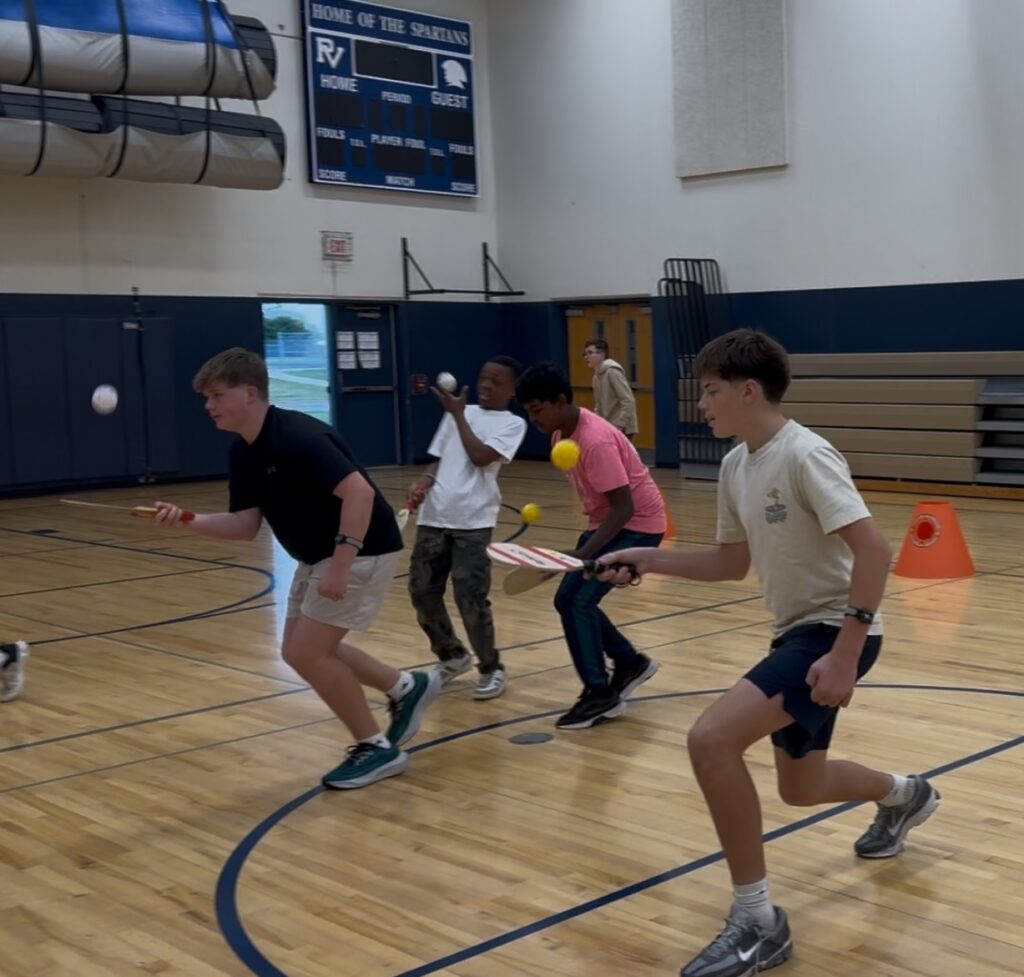
Since first adopting IHT’s heart rate monitors in 2016, Pleasant Valley Junior High has embedded them into Physical Education instruction for every 7th and 8th grade student.
Under the leadership of Health and Physical Education Teacher Caitlin Schoville, the SHAPE Iowa Middle School Teacher of the Year in 2022 and SHAPE America Central District Middle School Physical Education Teacher of the Year in 2024, plus a department of five other aligned PE educators, heart rate monitoring has become a cornerstone of how students learn about effort, cardiovascular health, and what meaningful physical activity really looks like.
What started as a desire to increase student awareness about cardiovascular health and accountability in PE has evolved into a data-informed, standards-aligned PE program that benefits students, teachers, families, and school administrators alike.
Why IHT’s Heart Rate Monitors Made Sense for Students
Schoville’s introduction to IHT’s student heart rate monitors came through professional connection and hands-on experience.
“At the SHAPE Iowa State Conference, we used them during a session and we really liked them for our PE classes,” she said.
That early exposure mattered. Instead of seeing heart rate monitors as an abstract concept, Schoville and her colleagues experienced firsthand how the technology functioned in a learning environment. When Pleasant Valley Junior High made the decision to purchase monitors in 2016, the choice was intentional and grounded in instructional value, not trends.
From the start, Pleasant Valley’s PE staff saw clear advantages in how our student heart rate monitors support both student learning and student dignity.
“We liked that the students could see their heart rates and associate them with the color zones,” Schoville said. “Another benefit was not having to project the class’s heart rates on a screen for everyone to see, as some other companies require. We also found a lot of benefits with the options to send heart rate reports home to both students and guardians at the conclusion of each class.”
That balance – visibility for learning without public comparison – proved critical, especially at the junior high level. Students are able to understand their own effort without feeling judged against peers.
“The monitors also work well because we can adjust the goal time based on the units students are in and we are able to share students for true student-selected PE units.”
Learning What Effort Really Looks Like
From the beginning, Schoville and her team were clear about why they wanted heart rate monitors for PE.
“Cardiovascular health is so important and understanding what your heart is doing and how to keep it healthy and strong is critical,” she said. “Students can see and associate their level of effort and rate of perceived exertion compared to what their heart is actually doing. We wanted students to know and understand that visually watching someone participate does not show or tell you their cardiovascular health.”
Schoville explained how this shifts perception in powerful ways, because heart rate data allows students to challenge assumptions about what effort looks like.
“For example, a student who is walking a lap on a track may be in the MVPA (moderate-to-vigorous physical activity) zone, while another student is running the lap but is barely into their yellow/MVPA zone. Without knowing, the walker may look like they are slacking or lack of participation, when in reality, they are working at a higher level than the person who ran a lap.”
Without the right data, that nuance is invisible. Teachers using the Spirit System can customize each student’s heart rate goals based on their individual cardiovascular health, ensuring expectations are personalized, accurate, and fair.
While Pleasant Valley’s core approach hasn’t changed, PE teachers are also using heart rate data to help students clearly distinguish between cardiovascular endurance and skill-based practice.
“One thing that has changed is our emphasis on students understanding the correlation between cardiovascular endurance exercise versus skill-based practice,” Schoville said. “We have many students that say things like ‘I had a 4 hour baseball practice last night and I’m so sore / tired / etc. (or insert any sport)’. Then we break down how a practice typically looks and they realize while some things at practice are very skill based, but not necessarily cardio based. Working on free throws is not going to be cardio based, but is a very important skill in basketball.”
Understanding this distinction helps students better interpret their bodies, recovery, and training needs.
Family Nights That Change Perceptions of PE
Believe it or not, one of the most powerful applications of IHT’s student heart rate monitors at Pleasant Valley happens outside the regular school day.
“We have now hosted four family nights over the last several years where families come to our Junior High at night and the family members get to wear the heart rate monitors while the students take them through a typical day in PE class,” Schoville said.
The impact is powerful.
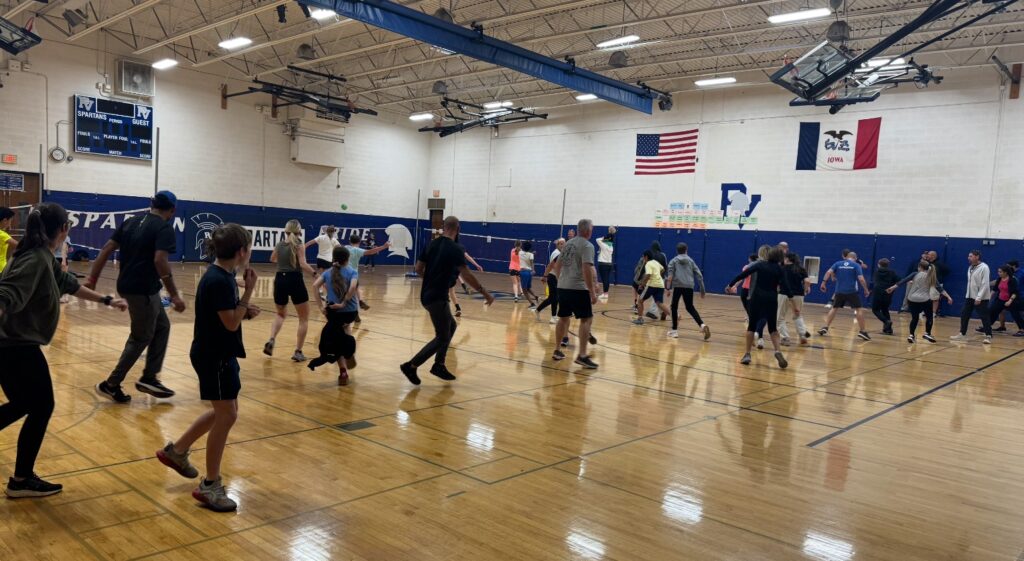
“We have the families do a short cardio based warm up with dynamic stretching, and a short muscular endurance work out. Then their student gets to take them to a variety of activities we have done in PE class- badminton, pickleball, tchoukball, spikeball, paddle zlam, yard games, and kickboxing. At the end, the family members sign out their monitors and the student explains the heart rate chart to them. It has been very eye opening to family members who typically did not experience this type of PE in their own childhoods.”
Parents often leave impressed by both the technology and the philosophy behind it.
“When our parents experience the heart rate monitors, we hear a lot of them share how cool it is to incorporate technology into PE class,” Schoville said. “They connect with their students and have conversations comparing how they track their activity using an Apple Watch or Fitbit to our data from PE class. Many also share that they wish they would have had this experience when they were in school to remove being compared to the athletic ability of varsity athletes.”
Those moments underscore how wearable smart technology creates a shared language between students, parents, and educators around movement, health, and effort.
Measurable Growth in MVPA & Instructional Quality
Over time, Pleasant Valley began tracking quarterly performance data as a department and came to some meaningful conclusions.
“We started tracking our quarterly performance as a building, and we realized that our Teacher Goal Minutes we were setting were way lower than what we were averaging,” Schoville said.
That insight led to intentional growth.
“We decided as a department we wanted to push the challenge, while still allowing students to see success,” she said. “[In] the last three years of our data, you can see that our overall performance, average per person, and teacher goal have all increased.”
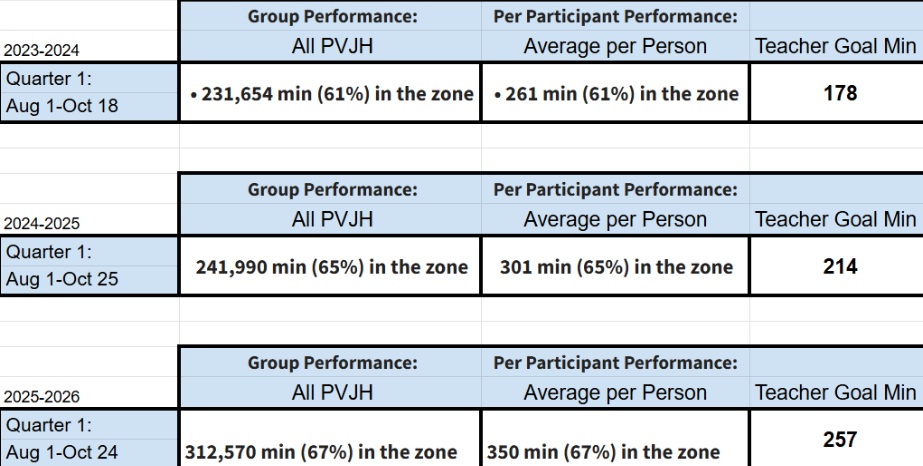
Across three years of quarterly data, Pleasant Valley Junior High steadily increased both total and per-student minutes spent in MVPA, while also raising teacher goal benchmarks each year. The parallel rise in performance and expectations suggests not only improved student engagement, but a department-wide shift toward more ambitious, data-informed instruction that highly motivates students.
For Schoville, student heart rate monitors support her role in measurable ways:
- Encourages student ownership (academic and behavioral self-management)
- Provides concrete data
- Justifies the quality of the PE program
The entire Junior High PE team is aligned in their perspective on the heart rate monitors.
“We value the data and find that the monitors are not only awesome for the students, but they have adjusted our teaching styles as well,” Schoville said. “We have improved our transitions, explanations, and directions. We have planned our whole lessons and units intentionally to maximize our time with the students.”
She is also candid with peers considering the implementation of heart rate monitors to strengthen their PE or wellness program.
“I’m not going to lie, it took a few years for us to get to where we wanted to be,” she said. “Another piece of advice: use them every day. Compare it to starting a new teaching position in a new school or implementing a big change in your classroom, it takes time for them to get used to it. Eventually the students just know the expectations and this is how PE is here.”
When implemented with intention, the payoff is clear.
IHT Heart Rate Monitors Make Cardiovascular Health Visible to Students
At the heart of this story is why Schoville does this work.
“I love teaching,” she said. “I enjoy it because I feel we have the power to help students enjoy learning and foster a love for movement and wellbeing.”
That belief continues to shape a PE program where student enjoyment, curiosity, and personal growth are as important as physical performance.
For Pleasant Valley Junior High, IHT’s heart rate monitors for schools are not just technology. They are tools that support equity, understanding, accountability, and foundational fitness literacy – one heart rate at a time.