The goal has always been clear for Deak Swearingen, Adapted PE Teacher and Consultant at Allen Park Public Schools in Michigan: help students with disabilities build life skills, confidence, and independence through movement. His students receive 50 minutes of adapted physical education (APE) every day – something he calls “unheard of.”
“I’m a firm believer in IHT,” he said. “It’s great to see how much impact we’re able to have with our students with disabilities.”
Today, Swearingen uses IHT’s heart rate monitors in his district’s middle school and high school (grades 6 through 12) to create safer sessions, more consistent routines, and data-driven insights that support Individualized Education Program (IEP) goals and teacher evaluations.
And the results speak for themselves.
Since January 2024, his 23 students have burned 148,407 calories in his adapted PE classes, averaging more than 6,453 calories per student. Students spend 25 percent of their time in the healthy zone, just shy of Swearingen’s ambitious goal of 29 percent.
“You want to reach for the stars and at least you’ll hit the moon,” he said.
For Swearingen, the value of our heart rate monitors goes beyond APE. It supports the foundational skills his students need to thrive.
“You’re building life skills, you’re building consistency to exercise, and you’re trying to build capacity for kids to be self-reliant. With a population that isn’t always self-reliant, this is one of those steps. And it’s really important because today’s youth is so AI-based and technology-based. The students really enjoy the monitors.”
Why IHT Was Chosen Over Other Options
Swearingen’s history with IHT goes back more than a decade, when he became the first adapted PE teacher in the country to use heart rate monitors while working in Ann Arbor, Michigan.
Being on the lookout for tools that deliver meaningful change for his students, he saw a presentation about chest-strap heart rate monitors. He immediately knew that approach wouldn’t work.
“My students would never wear a chest band,” he said. “But the sales representative told me wrist-watch technology was on the horizon. I said, ‘You have my attention.’”
Once IHT launched its wrist-based heart rate monitoring system, Swearingen became an early adopter and fan, using the monitors and assessment software districtwide in the Ann Arbor Public Schools district.
Years later, when he joined Allen Park Public Schools, he found the district had previously purchased 55 heart rate monitors from another provider – but none of them had ever been used due to technical problems.
That pushed Swearingen toward a familiar solution that he knew would work: IHT.
“The company itself has been very easy to work with, they have folks to help you get set up, and the technology is easy to use,” he said of IHT. “I think they separate themselves from others by how you can connect lesson plans and assessments with your data collection of heart rate monitors. This allows you to statistically know which units create higher heart rate content compared to what you may have thought created higher heart rates, and more time in your zones!”
So when he wrote two grants for his new program, he used the funds to purchase our heart rate monitors, knowing they are reliable and easy to use, would integrate seamlessly, support individualized instruction, and deliver the data the district needed.
Individualized Data That Supports IEPs, Evaluations & Safer Instruction
Swearingen’s students wear IHT’s monitors during adapted PE sessions three times a week, matching the objective he set for year one. The monitors support everything from goal setting to safety monitoring to keep students in safe, health-enhancing heart rate zones, especially for medically vulnerable students.
“I have some students who are epileptic and I need to monitor their data,” he said. “It’s a safety precaution. That’s why these monitors are so revolutionary.”
Kids don’t all show stress the same way, and the monitors help Swearingen quickly recognize when something isn’t right.
“You want to know when they’re stressed out, you want to know when they’re in distress. And that makes it a safer environment for everyone.”
The Spirit Software allows educators to customize target heart zones for each student, so Swearingen adjusts target heart zones based on individual needs.
“These individual students, I want them in red, and these individual students, I don’t want them in red,” he explained. “I might not be able to teach how many beats per minute are acceptable, but I can teach them which colors are acceptable.”
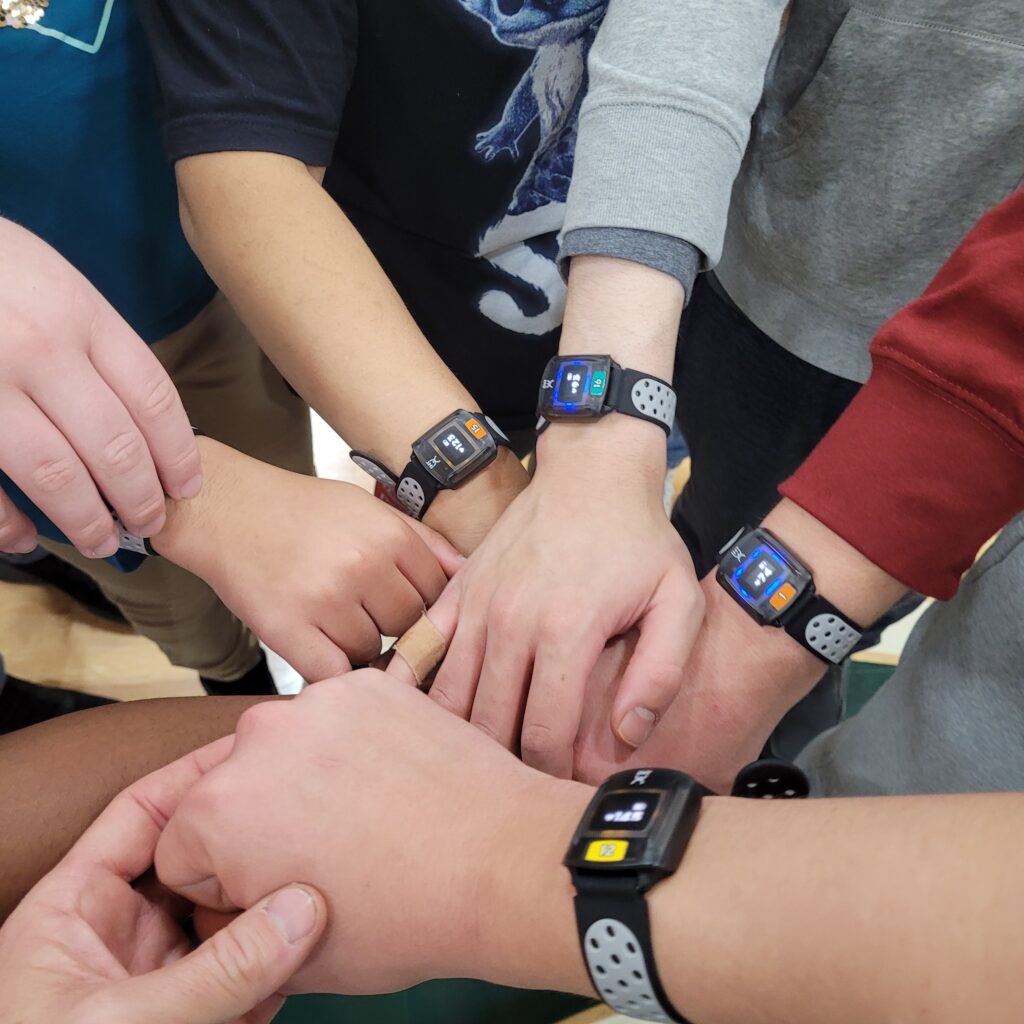
IHT’s heart rate monitors display the student’s current heart rate and show a color indicating the student’s current level of activity (also called a heart rate zone):
- Blue indicates low level activity or normal resting heart rate
- Yellow indicates moderate levels of activity or elevated heart rate
- Red indicates vigorous levels of activity or maximum heart rate
This simple, visual approach is crucial for students who may not be able to process numbers or abstract concepts but respond well to color and feedback. The biofeedback data collected from our heart rate monitors also help other professionals who work with these students: paraprofessionals, occupational therapists, physical therapists, general education teachers, and social workers.
“You can’t hide from the data,” he said. “It’s data-driven decisions. People might not like an activity or maybe some of your curriculum, but if they can see the data, they can’t argue that. It dispels some disbelief.”
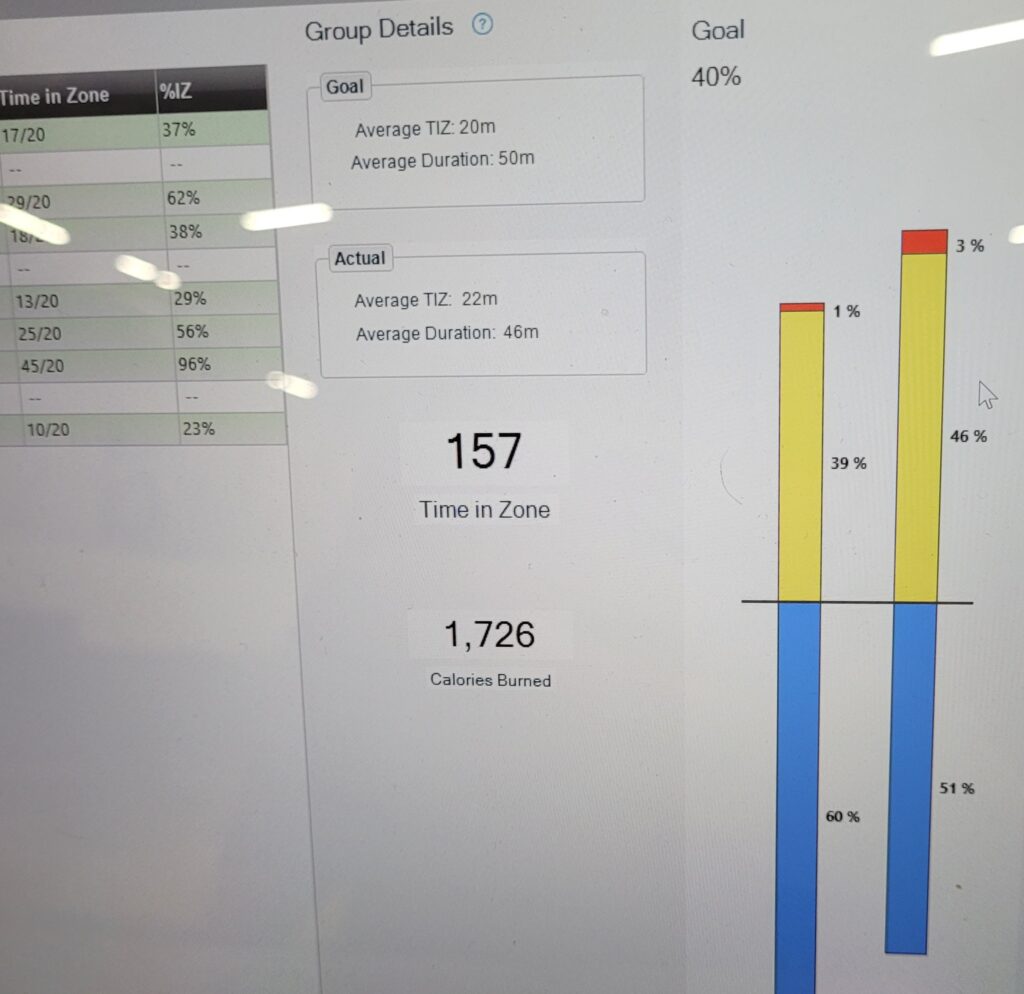
IHT’s assessment software provides data that supports IEP goals, growth documentation, and teacher evaluations. It also helps determine whether students are good candidates for mainstreaming.
“All of the things that they demonstrate or highlight in the general education world, that can also be applied in the adapted PE section, as long as you’re individualizing it for each student,” Swearingen said.
He shared an example illustrating how our technology helps educators use real data to decide whether a student is ready to transition into general education.
“They were deemed a medical concern when they were young,” he said. “This individual is now in high school. Their psychomotor skills have improved. They’re doing a good job with their heart rate monitor and we should be looking at mainstreaming the student. You can also have the individual wear the monitor in general education and still keep track of how they’re doing. The student can stay on consult basis but they’re in the least restrictive environment, which is what we should be doing more of in the United States.”
Preparing Students for Healthier Futures
Students with disabilities face higher rates of type 2 diabetes, cardiovascular disease, and obesity. They also experience higher levels of anxiety, depression, and social isolation. Swearingen sees that as a call to action.
“Anything we can do to combat that is what we should be doing,” he said. “And IHT is exceeding those expectations for me.”
For his students, APE becomes a safe place to practice healthy movement patterns with support, structure, and real-time feedback. One of the loudest benefits from Swearingen’s program is intrinsic motivation.
“I have students right now that I will ask to do 10 reps in a circuit, as a general parameter, and they will do 15 or 20 reps, because they want to see their monitor go to yellow,” he said. “I can’t teach that student that’s actually muscular endurance, but what I can teach that kid is ‘yellow is good and in some instances, red is even better.’ So that’s where the monitors really help and give intrinsic motivation to a non-intrinsic population.”
The shift is meaningful for his students – and for his fellow educators.
“I have better staff buy-in because they personally can see the growth, development, and progression,” he said. “There’s been whole-program improvement. That has definitely brought about a tighter-knit group.”
Shared responsibilities such as helping students put monitors on or returning them afterward have strengthened staff engagement and the program’s acceptance.
Spirit System: A Tool That Builds Motivation & Independence
Swearingen sees IHT as the missing bridge connecting individualized education plans to hard data and real, measurable outcomes.
“I knew what the potential was,” he said. “And I thought if I could match individualized education with students with disabilities and meet the needs of where their present level of performance was, we can show growth.”
And that’s exactly what’s happening.