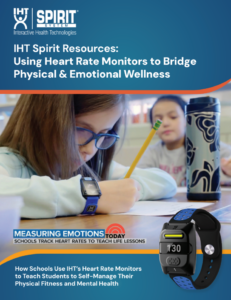

Picture this: A seventh-grader straps on a wrist-based monitor at the start of PE class. You can see, in real time, whether she is working at a moderate intensity or exercising vigorously. The student can see it, too, and that simple feedback loop changes everything.
Students are no longer guessing whether they are trying hard enough. You are no longer guessing whether they are engaged. The data tells the story.
This is the promise and the proven reality of wearable technology in schools today. The benefits of wearable technology in education extend far beyond counting steps or measuring calories. When implemented thoughtfully, wearable devices like heart rate monitors give educators, counselors, support staff, students, and parents a window into student wellness that was simply not possible before. They create accountability, spark self-awareness, generate meaningful data for reporting, and – perhaps most importantly – help students build lifelong habits around physical and emotional health.
Wearable technology in schools provides five core benefits:
- Objective effort measurement – Heart rate monitors quantify student physical activity regardless of ability level
- Real-time student engagement – Teachers see which students need encouragement during class
- Mental health monitoring – Counselors track anxiety and stress patterns through heart rate data
- Parent communication – Automated reports keep parents and guardians informed
- Standards alignment – Data supports fitness education and assessment programs such as the Presidential Youth Fitness Program (PYFP) and SHAPE America’s fitness literacy requirements
You’re looking to improve student wellness. Whether you are a physical education teacher trying to modernize your program, a school counselor working on emotional regulation, a special education coordinator seeking more objective student data, or an administrator looking to justify wellness investments to your school board, this blog post is for you.
Let’s explore how wearable technology – specifically wrist-based heart rate monitors – is reshaping education settings across the country.
What Is Wearable Technology in Education?
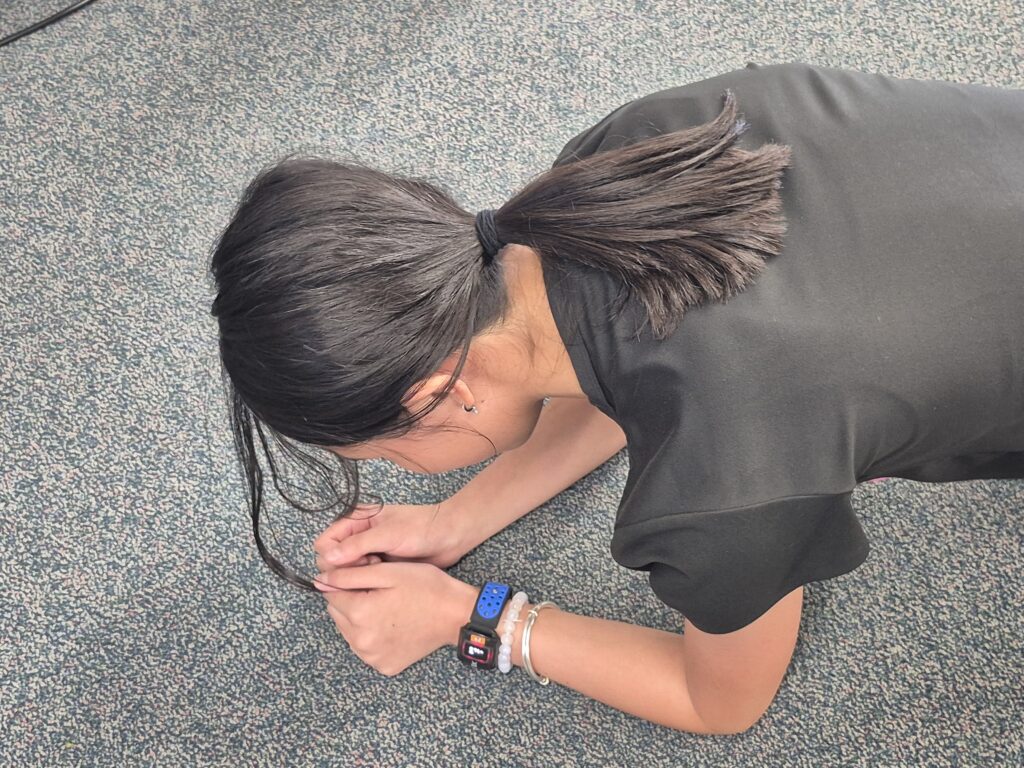
Wearable technology broadly refers to any electronic device worn on the body that collects, tracks, or transmits data. In consumer markets, this includes smartwatches, fitness bands, and health trackers. In educational settings, the most impactful category is purpose-built, wrist-worn heart rate monitors designed specifically for students and classrooms.
Unlike general-purpose consumer wearables, school-grade heart rate monitors are one of the best ways to monitor student wellness in schools, because they’re built with education in mind. They are durable enough for daily classroom use, simple enough for young children to put on independently, and designed to communicate directly with teacher-facing apps and reporting platforms. The best systems allow educators to monitor an entire class simultaneously while automatically generating session summaries and progress reports.
This is where the benefits of wearable fitness technology become especially powerful in schools. Fitness technology is no longer just about adults tracking their morning runs. It is about helping a 10-year-old understand that her heart is a muscle, that movement feels different at different intensities, and that her body sends her signals worth paying attention to. That kind of biofeedback, delivered at the right moment, can change a child’s relationship with health for life.
A comprehensive 2025 review published in Education Sciences examined technology-enhanced learning in physical education across multiple studies from 2017-2025. The research found that wearable fitness devices encouraged young people to increase their levels of physical activity. The study concludes that: “Technology-enhanced pedagogy in physical education (PE) presents substantial benefits, particularly in fostering student engagement, self-regulation, and personalized learning experiences. By incorporating digital tools such as wearable devices, gamified platforms, augmented and virtual reality (AR/VR), and artificial intelligence (AI), educators can create more interactive and data-driven learning environments that encourage active participation and enhance motor skill development.”
Wrist-based heart rate monitors are particularly well-suited for school environments because they are non-invasive, easy to distribute, and comfortable to wear across a full class period. Students quickly adapt to wearing them, and the visual feedback – seeing a number or a color-coded zone on a screen – creates an immediate sense of engagement and personal ownership over their wellness data.
Which Educators Benefit Most From Wearable Technology for Schools?
Wearable technology in schools delivers the greatest value to educators who are responsible for student wellness, physical activity, and data-informed decision-making. These tools help educators move beyond observation alone by providing objective, real-time insights they can use to personalize support, measure engagement, and demonstrate impact.
Best for PE teachers who:
- Need objective data to prove student effort and justify program funding
- Want to increase moderate-to-vigorous physical activity (MVPA) time
- Teach classes of any size and need real-time monitoring
- Are instructing virtual PE classes with students participating at home
- Want to maximize student participation and motivation in PE
Best for special education and adapted PE teachers who:
- Assess students with vastly different ability levels
- Need Individualized Education Program (IEP) documentation showing measurable progress
- Want equitable grading based on individual effort rather than performance
- Have to ensure that students are exercising within a safe heart rate zone
Best for school counselors who:
- Teach emotional skill development
- Work with students who struggle to verbalize feelings
- Need objective data to identify or track students experiencing chronic stress
Physical Education: Turning Effort Into Evidence
“All of a sudden, bam, it was a game changer. Kids are working harder than they’ve ever worked before. Kids who hated PE started liking it. They get a true assessment, and they celebrate when they meet their goals. The monitor gave them the power they never thought they had.”
– Scott Smith, San Bernardino High School PE Specialist, California
For PE teachers, the benefits of wearable fitness technology are immediately and viscerally clear. For decades, physical educators have struggled to prove the value of their programs with objective data. How do you demonstrate student effort? How do you show administrators that your class is producing measurable health outcomes? Heart rate monitoring finally answers both questions.
When students wear heart rate monitors during PE class, teachers gain access to real-time data that shows exactly how hard every student is working. You can see at a glance which students have reached their target heart rate zones, which students are coasting below the moderate-intensity threshold, and which students may be pushing too hard. This allows for immediate, individualized coaching – not guesswork.
Beyond in-class management, heart rate data supports PE program accountability at the district and state level. National standards, including those from SHAPE America, emphasize fitness literacy and the ability for students to monitor their own health-related fitness. Heart rate monitors align directly with these standards by helping students understand concepts like moderate-intensity activity, vigorous-intensity activity, and personal target heart rate zones.
Teachers have also reported a meaningful shift in student motivation once wearables enter the gym. When a student can see their own heart rate in real time, reaching their goal zone becomes personal. It stops being about running laps because the teacher said so and starts being about hitting a number that represents their own effort. That intrinsic motivation is one of the most enduring benefits of wearable fitness technology in a school context.
Automatic post-session reports can also be sent home to parents, creating a communication bridge that most PE programs have never had before. Parents can see what their child actually did in class that day, not just a general description, but real heart rate data and time spent in each intensity zone. That kind of transparency builds community trust and reinforces the value of physical education.
Adapted Physical Education: Equitable Effort for Every Student
“These individual students, I want them in red, and these individual students, I don’t want them in red. I might not be able to teach how many beats per minute are acceptable, but I can teach them which colors are acceptable. You’re building life skills, you’re building consistency to exercise, and you’re trying to build capacity for kids to be self-reliant. With a population that isn’t always self-reliant, this is one of those steps. The students really enjoy the monitors.”
– Deak Swearingen, Adapted PE Teacher and Consultant at Allen Park Public Schools, Michigan
Adapted PE teachers work with students whose needs vary enormously – students who use wheelchairs, students with developmental disabilities, students with chronic health conditions, and students who are simply at vastly different fitness levels than their peers. Grading and assessing these students on effort has historically been one of the most challenging aspects of the job.
Heart rate monitoring transforms adapted PE by making effort measurable regardless of ability level. A student in a wheelchair will have a different maximum heart rate range and different physical capabilities than other kids, but both students can work toward their personal target heart rate zones. The monitor does not care about what activity is being performed. It measures physiological effort, which is the one universal constant across all adaptive movement.
This objective – individualized data – also supports IEP documentation. Adapted PE educators can use heart rate session reports to demonstrate that a student is meeting physical activity goals, show progress over time, and provide evidence-based justification for continued services. The data becomes part of the student’s story in a way that subjective observation simply cannot replicate.
Perhaps most powerfully, heart rate monitors give students with disabilities the same sense of data ownership and personal achievement that their neurotypical peers experience. Seeing a color on a screen, knowing it represents their own hard work, and watching their growth over a semester is deeply affirming for any student. And for students who are often marginalized in traditional academic settings, that affirmation matters enormously.
Virtual Physical Education: Closing the Distance Gap
“The most valuable part of IHT is the ability for instructors and teachers to monitor their student’s progress towards physical fitness hours all in one location using the IHT assessment software. We can say, ‘Hey, I see your workouts and a lot of them have been in the blue range. Here are some workouts that you can try that will elevate your heart rate.’ With other options, such as Polar, Garmin, etc., teachers would have to go student to student to assess their progress. The [IHT] assessment software allows the teacher to manage time and provide feedback more effectively.”
– Brett Helman, Supervisor of Virtual Prince William, Virginia
Online and virtual PE programs have grown significantly in recent years, driven by the expansion of digital learning platforms and the convenience of remote education. But virtual PE has always faced a fundamental credibility problem: How do you verify that students are actually exercising at home rather than sitting at their desks pressing buttons?
Heart rate monitors provide the answer. When a student at home wears a wrist-based monitor from IHT, for example, their session data syncs automatically to the teacher’s platform. The teacher can see exactly how long the student was in each heart rate zone during their at-home workout. There is no way to fake a 20-minute moderate-to-vigorous workout – the data is either there or it is not.
This capability makes the benefits of wearable technology in education especially significant for virtual and hybrid programs. Teachers can assign activity goals, students can complete them independently at home, and the data flows back to the teacher’s dashboard automatically. Grading virtual PE on effort rather than activity type becomes both possible and defensible.
Virtual PE teachers also report that the monitor itself improves student engagement at home. When students have a tangible device on their wrist and can see their data in real time on their phone, the workout feels more structured and purposeful. The wearable becomes a motivational tool that bridges the physical separation between teacher and student.
Special Education: Unlocking New Pathways for Learning and Regulation
“Our students within our program struggle with emotional regulation and it’s really hard for them to connect their physical state to their emotional state at the same time. The heart rate monitors have been integral in that for us because it provides them with a concrete visual for them to see if they are elevated in a moment and it also provides that for our staff so they can connect that elevated state which has really been super helpful with our students. It’s really been a game-changer for our students in emotional regulation.”
– Jen Winefka, Special Education Coordinator at Hillcrest High School, Illinois
Special education classrooms often include students who struggle with body awareness, self-regulation, and understanding the physical signals their bodies send them. For students with autism spectrum disorder, ADHD, sensory processing differences, or trauma histories, learning to recognize and respond to physiological cues can be genuinely transformative.
Heart rate monitors give these students a concrete, external representation of an internal experience. Rather than asking, “How do you feel right now?” – a question that many students with developmental differences struggle to answer – an educator or therapist can point to the monitor and say, “Look at the color and your number. What does that mean for your body?” Over time, students begin to connect the colors or numbers they see with the sensations they feel, building a vocabulary for self-awareness.
This kind of biofeedback-based body awareness is a cornerstone of many evidence-based emotional wellness frameworks and therapeutic approaches. Wearable heart rate monitors bring that concept into the classroom in an accessible, low-barrier way that does not require specialized training or additional clinical resources.
Special education teachers also benefit from the documentation capabilities of wearable tech. Heart rate data can be incorporated into behavioral and wellness logs, providing an additional objective layer to IEP progress notes. When a student had a difficult day, teachers can look back at whether a spike in heart rate preceded the behavioral event and use that information to evaluate future de-escalation and coping strategies.
School Counselors: Where Heartbeats Meet Emotional Health
“This is a pretty amazing tool. I’ve wanted to be able to see every student in the school for 23 years and I didn’t know how to do that. Well, now I’m doing that. The third graders don’t always know if they are hyper because they’re excited or because they are anxious. This gives you a chance to learn that about yourself.”
– Joelle Klemz, Social Worker at Braham Area Schools, Minnesota
The connection between physical arousal and emotional state is well-established in psychological research. When a student’s heart rate is elevated, their nervous system is activated, which may mean they are engaged and energized, or it may mean they are anxious, overwhelmed, or heading toward a behavioral crisis. School counselors who have access to real-time heart rate data gain an entirely new dimension of insight into student wellbeing.
For students working on emotional regulation – a goal that appears in the caseloads of nearly every school counselor in the country – a wrist-based heart rate monitor can serve as an objective anchor in sessions. Counselors can guide students through breathing exercises, mindfulness practices, or grounding techniques while watching in real time as the student’s heart rate responds. The data makes the intervention visible, which deepens both understanding and buy-in for the student.
Students who struggle to articulate their emotional state verbally – which includes a large proportion of children in crisis, children with trauma histories, and children with developmental differences – can use the monitor as a starting point for conversation. “Your heart is beating pretty fast right now. What’s going on for you?” is often a more accessible entry point than “How are you feeling today?”
Heart rate data can also help counselors identify patterns over time. A student whose heart rate is consistently elevated during morning check-ins may be experiencing chronic stress at home. A student who shows rapid heart rate spikes during transition periods may need additional support during those times. This kind of longitudinal insight is one of the most underappreciated benefits of wearable technology in education for school counseling programs.
STEM Education: The Human Body as a Learning Laboratory
“The teachers said they were becoming better teachers. The kids were getting higher scores playing games and answering questions as opposed to sitting at a desk and doing a worksheet. What makes it work is that it’s designed for small-space learning. We have to be constantly innovating in our teaching, and most of that is going to be through technology.”
– Sean Splawski, the Science, Technology, Engineering, Arts and Mathematics (STEAM) Lab teacher at Mableton Elementary, Georgia
One of the most exciting and underutilized applications of wearable technology in schools is in STEM or STEAM classrooms. Heart rate monitors transform students into active participants in real-time scientific inquiry, and the subject of that inquiry is their own bodies.
Science teachers can design labs around heart rate data in ways that address core biology and health standards. Students can design and conduct experiments to test how different activities affect heart rate, graph their results, analyze variability between students, and draw evidence-based conclusions about cardiovascular physiology. The data is real, the stakes feel personal, and the engagement is remarkably high.
Math teachers can incorporate heart rate data into statistics and data analysis units. Students can calculate mean heart rates, create frequency distributions, explore the relationship between exercise duration and recovery time, and learn about data visualization, all with data they generated themselves. Cross-curricular projects that connect PE data to math or science classrooms are an emerging and powerful model that wearable tech makes possible.
Technology and engineering teachers can use heart rate monitors to explore how sensors work, how data is transmitted via Bluetooth, how apps process and display biometric information, and even how consumer health devices are designed. For students interested in careers in health tech, biomedical engineering, or data science, this kind of hands-on exposure is genuinely career-shaping. The benefits of wearable fitness technology extend into the STEM classroom in ways that most schools are only beginning to discover.
The Spirit System: Built for Every Corner of Your School
Not all wearable technology platforms are created equal. And for schools, the right system needs to do much more than simply track heart rates.
The best heart rate monitors for schools need to work seamlessly across multiple classroom contexts, generate reports that administrators can actually use, support both individual and group monitoring, and be simple enough that a teacher with no technology background can run a full class session without missing a beat.
The IHT Spirit System – developed specifically for educational and youth wellness settings – is exactly that. It combines the Spirit Heart Rate Monitor, a durable wrist-based wearable designed for school use, with a robust software suite that serves teachers, counselors, parents, and students.
For Teachers
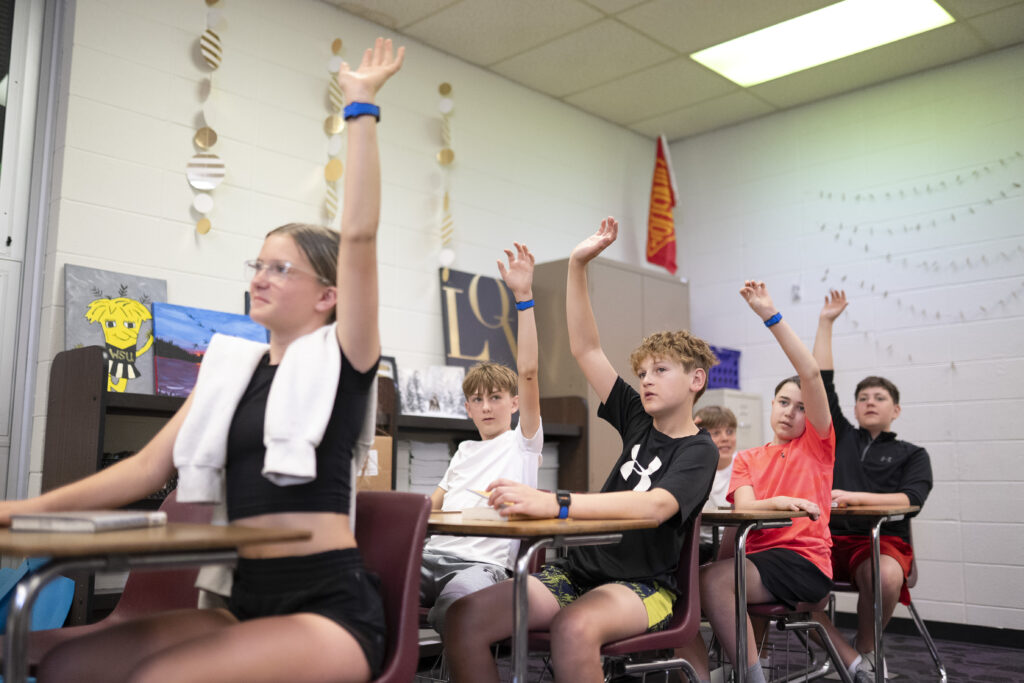
The IHT Classroom App allows PE teachers, adapted PE coordinators, and classroom educators to monitor every student’s heart rate simultaneously from a single Android or ChromeOS device. Data dashboards show exactly who was in their target zone and who needs more encouragement. Class transitions are faster, motivating students is easier, grading is effortless, individualized instruction is not a problem and student MVPA increases. Post-session reports are also generated automatically, saving teachers the time and effort of manual documentation.
For Students
Students receive immediate feedback on the wrist-based monitor that makes effort and cardiovascular health personal and visible. Journaling and self-reflection features help students connect their physical data to their emotional experiences, building body awareness and wellness literacy over time. Automatic session emails keep students informed and accountable, even outside school hours. The Spirit Individual App pairs one-to-one with a student’s monitor for at-home use, perfect for virtual PE or family wellness.
For Schools and School Districts
The Spirit System includes a web-based platform that centralizes all student wellness data across the entire school or district. Reports can be generated at the student, class, campus, or district level, and can be aligned to state and national physical education standards, making accountability reporting straightforward. Administrators can track fitness scores, emotional wellness trends, and program-wide outcomes in one place, providing the kind of evidence-based documentation that justifies continued wellness investment to school boards and community stakeholders.
The Spirit System supports counselors, behavioral health providers, and mental health professionals by providing objective data on students’ physical activity levels, heart rate patterns, and overall engagement in wellness activities. This information helps these professionals identify students who may be struggling, track progress over time, and have more informed conversations about the connection between physical activity and mental wellbeing.
For schools looking to take full advantage of the benefits of wearable technology in education, the Spirit System provides a complete, purpose-built solution that grows with your program and serves every stakeholder – teachers, students, counselors, families, and administrators – with meaningful, actionable data.
10 Ways Heart Rate Monitors Transform Schools (Quick Summary)
- PE teachers gain objective grading data for the first time
- Students see real-time feedback, increasing intrinsic motivation by connecting effort to visible results
- Adapted PE becomes equitable through personalized heart rate zones
- Virtual PE programs can verify at-home student workouts
- Special education students build body awareness and self-regulation
- Counselors identify anxiety patterns and teach biofeedback techniques
- IEP documentation becomes objective and evidence-based
- Parents receive automated session reports, ensuring transparency into student participation and effort in PE
- Administrators access district-wide wellness data for school board presentations
- Heart rate monitors provide objective, quantifiable data that demonstrates student participation and effort, giving schools credible evidence to evaluate and adjust program effectiveness
A Healthier, More Connected School Starts With One Wrist at a Time
The future of education is not just smarter – it’s healthier.
As schools increasingly recognize the inseparable connection between physical health, emotional wellness, and academic performance, the tools we bring onto our campuses for students matter more than ever. Wearable technology, and specifically wrist-based heart rate monitors, offers educators across every setting a powerful, practical, and evidence-aligned way to support the whole student.
From the PE teacher who finally has data to back up her students’ effort, to the adapted PE coordinator providing equitable and personalized assessment, to the counselor using biofeedback to open up a conversation about anxiety – the benefits of wearable technology in education touch every professional in a school district.
And at the center of it all is a student who looks down at their wrist, sees a number that represents their own effort, and begins to understand that their health is something they can measure, understand, and own. That moment of recognition, repeated day after day and year after year, is how we build a generation of healthier, more self-aware people.