When Renita Searcy, Physical Educator at Whispering Pines Elementary in Humble, Texas, with master’s degrees in Social Emotional Learning (SEL) and Yoga, talks about her fourth graders, her enthusiasm is impossible to miss.
With 17 years of teaching experience, Searcy brings a whole-child perspective to physical education at Whispering Pines Elementary. So when she discovered a way to fund wearable heart rate monitors for her students – and was awarded a $2,500 grant from the American Heart Association (AHA) to make it happen – she wasn’t just buying equipment. She was leveling up her entire program.
Here’s how she did it, and what it’s meant for her students.
Building a Heart Rate Monitor Program From the Ground Up
Humble ISD has been using IHT’s heart rate monitors for schools since around 2019, but Whispering Pines Elementary was new to the technology. When Searcy joined the school, her fourth graders had never worn a heart rate monitor.
Getting started meant customizing IHT’s onboarding resources for her students. Using that foundation, she built Google Slides presentations to help students understand how to put the monitors on, what the color zones mean, and how to interpret what they’re seeing in real time. It was time she considered well spent.
“In elementary, they have to see it,” Searcy said. “For them to see it, then they understand it more. They need to be doing it while they’re seeing it to comprehend what the body should be doing.”
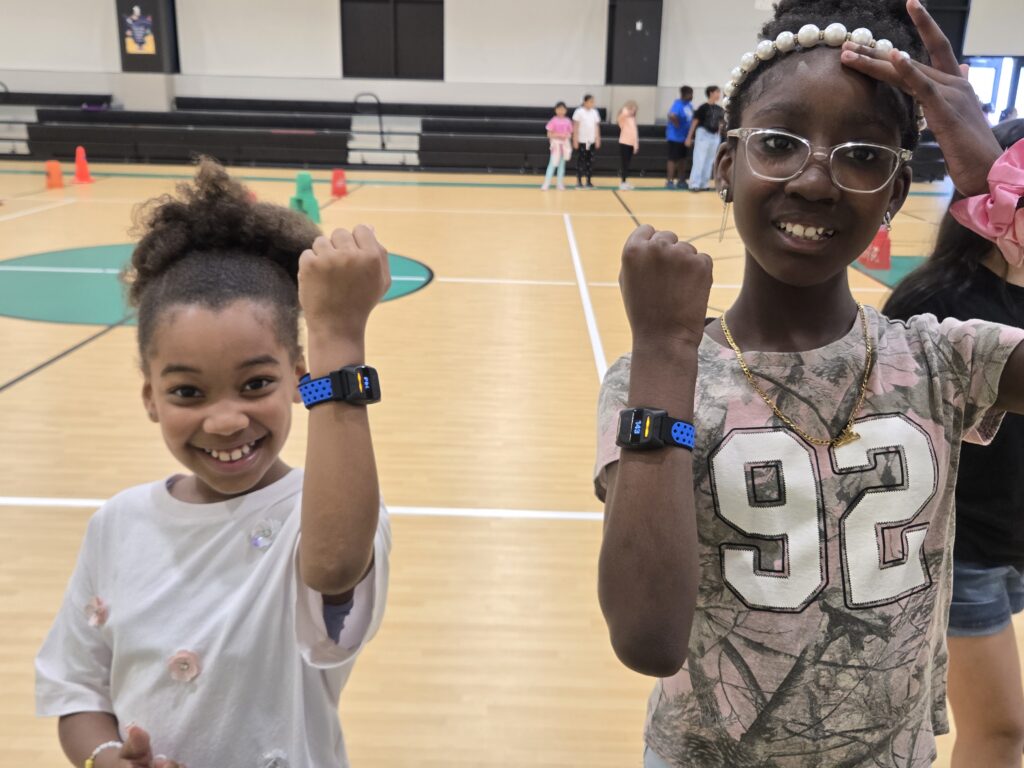
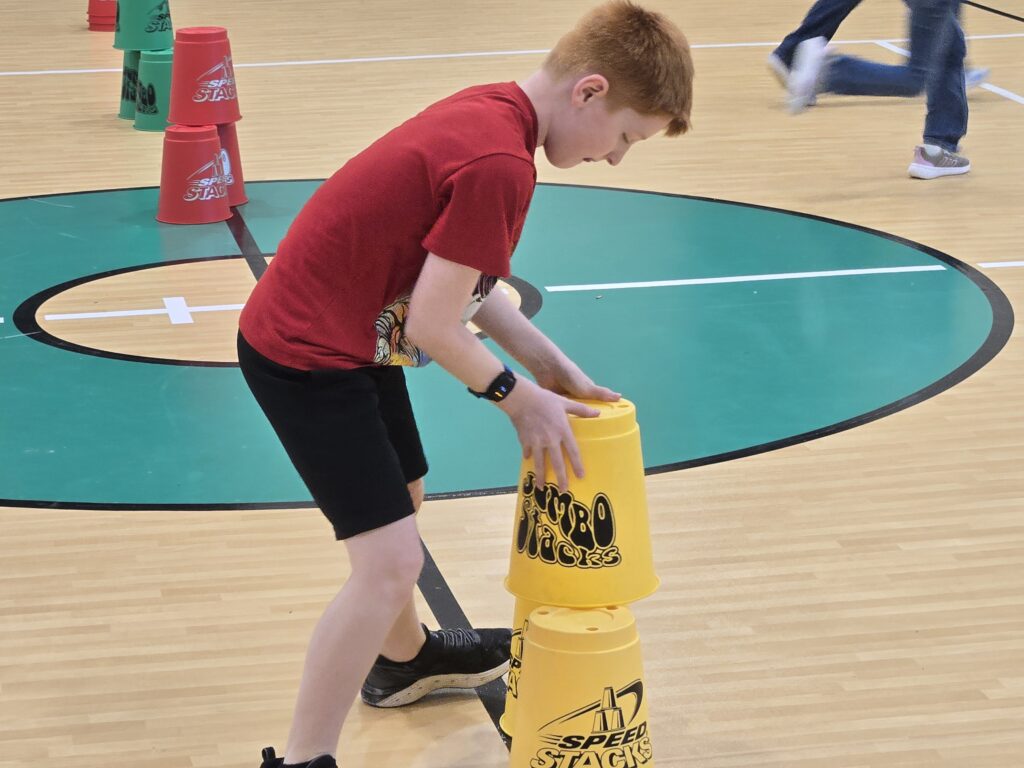
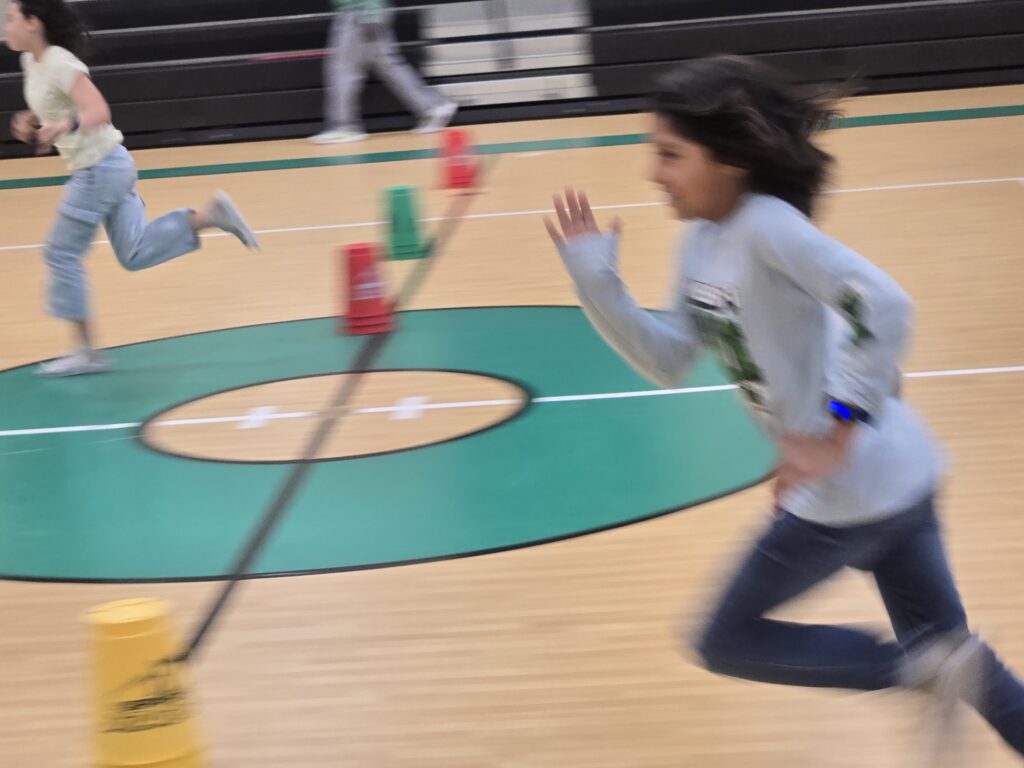
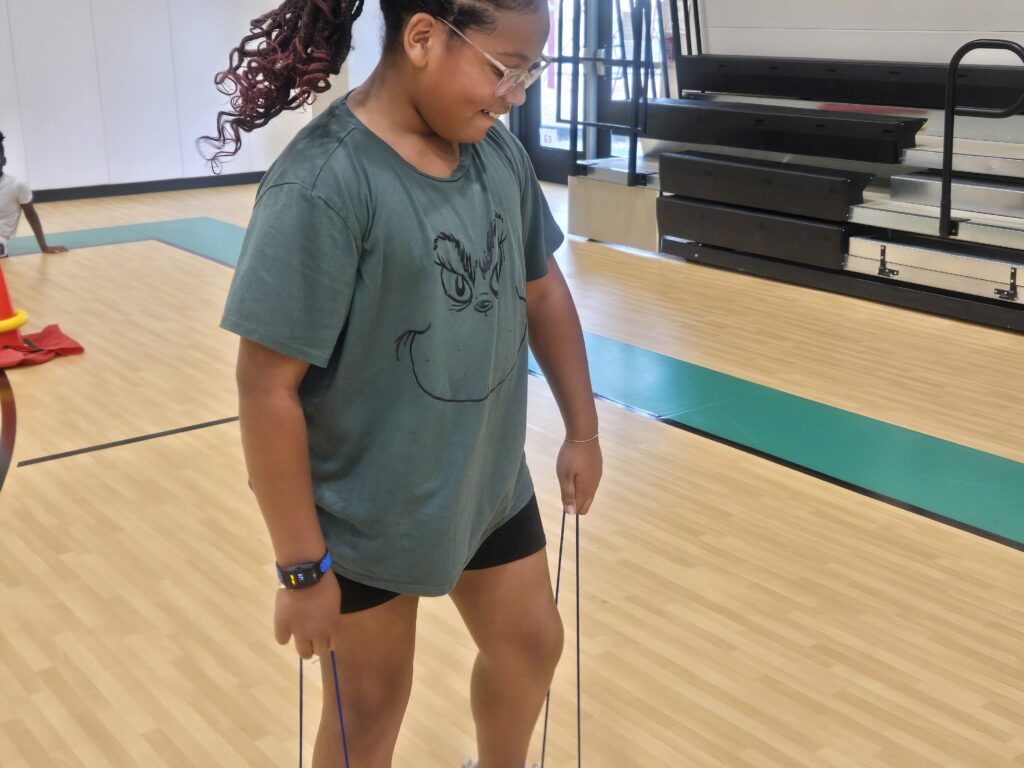
Today, all five of Searcy’s fourth grade classes (approximately 100 students) wear our Spirit heart rate monitors for schools every time they come to PE, which is once a week. Each student wears a monitor for the full class period. When she has two classes at the same time, she rotates monitor access so every student gets hands-on time. Her goal for next school year is to expand the program to include third and fifth grades.
The Kids Heart Challenge: A Gateway to Grant Funding
Searcy’s path to funding the heart rate monitors runs through the AHA’s Kids Heart Challenge™ – a school-based fundraising program that promotes cardiovascular health through fitness and community fundraising. She’s been running the program at her school for two years.
What many PE teachers don’t realize is that participating schools can also apply for a grant opportunity through the AHA. This is distinct from the Kids Heart Challenge giveback program: schools can earn a gift certificate to US Games, a trusted provider of PE and recess equipment, along with a cash award that increases with every dollar raised. The grant, however, can be spent with any approved vendor, including IHT.
“The Kids Heart Challenge, I’ve been doing it for a couple years now,” Searcy said. “It’s an amazing program. It’s pretty much promoting everything about having a healthy heart – how to eat right, how to exercise, everything that I believe in that I want my kids to understand.”
With her application, Searcy made a strategic choice: she focused her grant narrative on cardiovascular endurance, tying it directly to the Physical Fitness Assessment Initiative (PFAI) that Texas PE teachers are required to administer. Humble ISD uses IHT’s software districtwide to capture this state mandated testing data.
“I focused my grant on cardiovascular health … but also endurance,” she said. “And that’s what I focused my grant on, because the [Physical Fitness Assessment Initiative (PFAI)] is a state assessment for PE teachers.”
She also made sure her application looked beyond the classroom. She wrote about her long-term vision for her students, not just what the monitors could do this year, but how the skills and habits her students develop could extend into their lives beyond school.
“When you write the grant, they want to hear what it’s doing right now … what can it do beyond your classroom,” Searcy explained. “I’m not just talking about my classroom, because we always want to connect kids to real-life, real-scenario situations. That can help your application stand out. I want my kids to be lifelong, healthy individuals.”
It worked. Searcy received $2,500 to help her school purchase Spirit heart rate monitors. (Searcy and her school already had access to the Spirit Software Suite ecosystem because Humble ISD has used IHT’s software suite districtwide for collection and reporting of PFAI since 2019.)
Stretching the Grant Through Fundraising
The grant paid for approximately half of the cost of the 24-monitor set Searcy purchased, so she got creative to cover the rest. She used fundraising to get the rest of the money needed, primarily by selling T-shirts at her school’s Field Day and her annual Turkey Trot run.
She also offers a practical tip on timing: teachers don’t have to rush to spend the grant money. Funds from the AHA can roll over to the following school year, which gives educators the flexibility to wait until they’ve raised the full amount before purchasing.
“I wanted to not touch that money until I had all my money in place,” Searcy said. “You might not reach your fundraiser goal, but then what about next school year? You do the same fundraiser, and then you make your mark, and now you can purchase them from the following school year. Check with your district, but I know with American Heart Association, you don’t have to use the grant money. It can roll over to the following school year.”
One additional important note: to be eligible for the AHA grant, schools must be actively participating in the Kids Heart Challenge program. The grant is only open to schools that bring the Kids Heart Challenge fundraiser to their campus. If you’re not already running it, that’s your first step.
The Color Zones Change Everything in Class
Searcy describes the first few months with the Spirit monitors as both exciting and a learning curve. Because her students had never worn a smartwatch-style device before, she had to teach basic skills – how to put the bands on, how to take care of the monitors – before getting to the fitness content.
But once students got the hang of it, something shifted. The monitors gave Searcy a new language to use with her students, and it was one they immediately understood.
“The colors are so easy for the kids,” she said. “They recognize them, and I explain to my students that if you are in the yellow zone, that’s great, but try to reach red at least two or three times during PE. So that’s my language I’m using because I want them to be at vigorous level. But what’s the vigorous level mean for a third grader? They really don’t know. So it’s [about] breaking it down for their comprehension.”
The heart rate zones (blue for low/resting, yellow for moderate, and red for vigorous) give students a real-time visual that turns abstract fitness concepts into something concrete and personal. When a student sees their monitor turn red, they know what vigorous effort feels like in their body. When it drops to yellow, they understand their body is recovering. Suddenly, the word “endurance” means something.
“For me, it’s giving them that visual aid and the visual aid is themselves,” she said. “This is what vigorous feels like and looks like if my heart monitor is in red. This is what it feels like to be at moderate level. So, for me, it’s totally been a game changer because I’m talking about it, but now, I’m talking and the action is with it. You need both components for me to take my PE class to the next level where I want them to be.”
Connecting With Their Bodies in Meaningful Ways
One of the most distinctive aspects of Searcy’s approach is what happens at the end of every class period: a five-minute debrief. Students talk through what they did, what they noticed on their monitors, and how their bodies felt during the activity. It’s a habit that turns physical data into genuine self-awareness – one of the many benefits of wearable technology in education that the Spirit monitors make possible.
“When we debrief, that’s where we’re making all the connections,” Searcy said. “‘Yes, coach, I’m at red.’ Review what red means again. ‘I’m at my moderate level.’ Why didn’t you meet your levels? And I think for the students to understand that, you have to have a conversation, because sometimes we throw information at them and they don’t, number one, have time to process the information, let alone download the information. I give them time to absorb the information and download it and express how did it make them feel? Because that’s important, because you need to know how it feels.”
This is what she means when she talks about helping students “connect with their bodies in meaningful ways.” It’s not just about heart rate data. It’s about building body awareness, self-knowledge, and lifelong fitness habits – one school day at a time.
“I want them to really really comprehend fitness,” Searcy said. “Not just tell them to be healthy, but what does it mean as an elementary student to be healthy? My goal is for them to tell me what it means to them. Because every student’s health and fitness is different.”
Changing the Game for Students Who Didn’t Love PE
One of the most meaningful shifts Searcy has observed involves students who traditionally weren’t engaged with physical education. Adding technology to the class has changed the dynamic for those students in particular.
“When you do the same routine, they are in elementary, they get kind of bored,” she said. “So when you bring excitement – and technology is always exciting for kids to use – it uplifts your PE program. They love to run because they have the heart monitor on. It’s fun. They love to see the colors changing when they’re doing a game.”
For students who previously resisted physical activity, the monitors have been a motivator in ways that verbal encouragement alone couldn’t achieve.
“Even with some of my students who really don’t like to run, I’m noticing that [the heart rate monitors are] making a change in them,” Searcy said. “They can actually see what they’re doing. I’m still encouraging them and telling them the information, but now they’re seeing it. It’s such a game-changer. And it might even cut back on some of your behavior students or students who really are not the big PE kids. This is a new generation of kids who are all about technology. So bringing technology in, that’s what they love.”
Searcy sees this as more than just a PE win. She views it as a foundational lesson in what healthy living can look like for each individual child. Not a one-size-fits-all prescription, but a personalized journey.
“To be healthy, it’s a lifelong journey,” she said. “But to be healthy, you need to understand what it means to be healthy. And I feel like at the elementary level, that’s our job to deliver it to them in their language, where they understand it.”
Making Your Impact Visible With Data
Beyond the student experience, the heart rate monitors have also changed how Searcy documents and demonstrates her professional impact.
The Spirit monitor’s data is extremely valuable because it helps teachers document and demonstrate student growth over time to support their Teacher Incentive Allotment (TIA) designation (a Texas program that rewards teachers with additional compensation based on demonstrated student growth and performance). For a teacher trying to earn a “distinguished” rating, the data is invaluable.
“You can be the greatest teacher in the world, but if you don’t have [evidence], what evidence can you show that you are doing the work?” Searcy said. “The heart rate monitors take my classes to the next level because it really shows the data and it maps out everything. You’d be amazed how the principals are so: “Oh, you’re using technology at this level?’”
Tips for Educators: Funding, Grant Writing & Getting Started
Searcy is generous with her advice for other PE teachers and school staff looking for edtech funding strategies to bring heart rate monitors into their programs. Here are her top recommendations:
- Participate in the Kids Heart Challenge first. The AHA grant is only available to schools that run the Kids Heart Challenge fundraiser. Start there, and let the program build momentum.
- Focus your grant application on cardiovascular health and go beyond the classroom. Tie your request to measurable student outcomes, state assessments, and a long-term vision for your students’ health. Reviewers want to see impact that extends past your gym doors.
- Know your district’s funding resources for edtech. Many districts have internal grant opportunities that can be used to match outside funding. In Humble ISD, for example, there are district-level grants PE teachers can apply for to supplement program budgets.
- Get creative with fundraising. Field Day T-shirt sales, Turkey Trot runs, and similar school events can generate meaningful revenue for your program. Multiple smaller fundraisers can add up to major equipment purchases over time.
- Don’t rush. If you win a grant but haven’t reached your fundraising match yet, check with your district about whether the funds can roll over to the next school year.
- Be willing to go the extra mile. Writing grants takes time, and it often happens outside of school hours.
“I know teachers can be overwhelmed, and I’ve been there,” Searcy said. “You just have to take the time to do it. And, and you’re going to see the rewards for it. And you will see the rewards in your classroom – it makes my heart flutter when I just see the kids and all the smiles. This is why I do this.”
An Impactful Program Built to Grow
Searcy is already mapping out the next school year: expanding the monitors to third, fourth, and fifth graders, having students set their own individualized goals, and hosting a potential professional development session to share what she’s learned with other PE teachers in Humble, Texas.
For a first-year program, the early signs are remarkable – and she knows the best is still ahead.
“I can already see it, and they’ve only been using them for two months,” Searcy said. “Once we have a whole school year, I can imagine what [the monitors are] going to be able to do for them … it’s definitely going to be a game changer for sure.”
If you’re a PE teacher, PE coordinator, student counselor, or district administrator looking to bring heart rate monitor technology into your school – and explore funding opportunities to make it happen – IHT’s Spirit System is built for exactly this kind of work.