
Picture two classrooms.
In the first, students sit quietly at their desks for the majority of the day. Heads down, pencils moving, bodies still.
In the second, students spend meaningful time being physically active before settling into focused learning.
Which classroom do you think produces stronger academic results?
If your gut says the second one, the research agrees with you. The connection between physical activity and academic achievement is one of the most well-supported findings in modern education science. Yet, PE programs and movement breaks remain among the first things cut when schools face budget pressure or scheduling constraints. That disconnect costs students more than they may realize.
Whether you’re a PE teacher, a classroom teacher, or a school administrator, understanding this relationship isn’t just professionally interesting – it’s practically essential. Here’s what the evidence says, why it matters for your school, and what you can do about it.
The Body and the Brain Are Not Separate Systems
For decades, the Western educational model treated physical activity as a reward, a break, or at best a health requirement. Something separate from the serious work of learning. Neuroscience has fundamentally challenged that assumption.
Physical activity is now understood to play a direct role in learning. When students move, their bodies release a cascade of neurochemicals – including dopamine, serotonin, and norepinephrine – that directly support memory formation, attention regulation, and executive function. Physical activity also promotes neurogenesis, the growth of new brain cells, particularly in the hippocampus, which is the region most responsible for learning and memory consolidation.
In short, movement literally prepares the brain to absorb and retain new information.
This is why researchers who study the correlation between physical activity and academic performance consistently find the same thing: students who move more tend to learn better. That correlation holds across age groups, income levels, and subject areas.
What the Data Actually Shows
The research isn’t limited to controlled lab settings. Large-scale, real-world data collected from American students paints a consistent and compelling picture.
The CDC’s Youth Risk Behavior Survey
The Centers for Disease Control and Prevention analyzed national data from the Youth Risk Behavior Survey (YRBS) and published findings on the relationship between physical activity, sedentary behavior, and academic grades among U.S. high school students. The results are striking.
- Students with mostly A’s were 20% more likely to be physically active for at least 60 minutes per day on all 7 days of the week, compared to students earning mostly D’s and F’s.
- 66% of A students played on at least one sports team, compared to just 42% of students with the lowest grades.
- Students with lower grades were nearly twice as likely to watch three or more hours of television per day, and significantly more likely to spend excessive time on non-academic screen activities.
The CDC is careful to note that the data shows a significant association, not necessarily direct causation in one direction. But analyses controlling for sex, race/ethnicity, and grade level confirmed that the link between physical activity and academic grades is statistically significant and not simply an artifact of demographics. The relationship is real, and it is consistent.
Active Play Sharpens Young Minds
A ground-breaking study published in the peer-reviewed journal Pediatrics in 2014 examined what happens to children’s thinking skills when they get consistent, structured opportunities for active play each day – and the results offer a compelling case for protecting physical activity time in schools.
Researchers from the University of Illinois at Urbana-Champaign studied 109 children between the ages of 7 and 9 through a nine-month after-school program called Fitness Improves Thinking in Kids (FITKids). Students participated nearly every day, spending at least 70 minutes engaged in free-form physical activity.
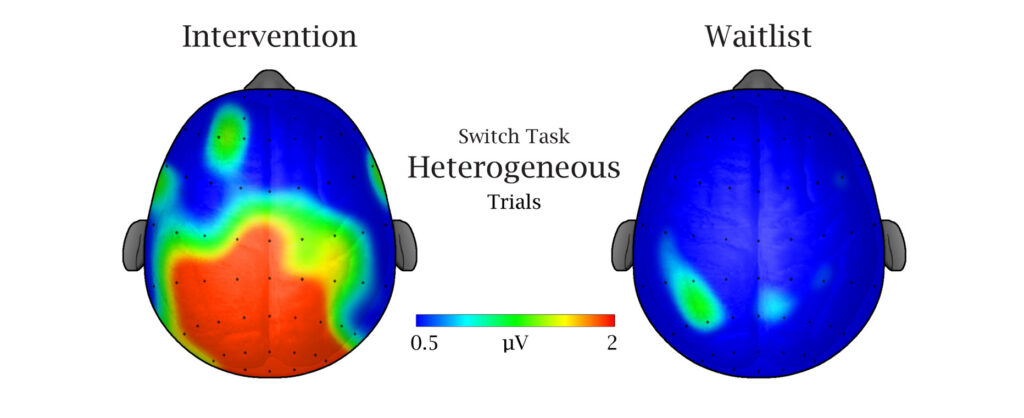
Children who completed the program showed meaningful gains in cognitive function compared to the children who were on the waitlist for the FITKids program:
- Stronger multitasking ability
- Sharper attention and focus
- Greater mental flexibility
- Measurably increased brain activity during cognitive tests
For PE educators especially, the FITKids findings reinforce what many already know from experience: that the gym, the field, and the track are not separate from the classroom. They are an extension of it.
Beyond Test Scores: How Physical Activity Shapes the Whole Student
While increased movement has been proven to help schools improve their students’ academic performance (e.g., how this elementary school improved its students’ math scores), the link between physical activity and academic achievement extends well beyond GPA and standardized test performance. Physical activity is also closely associated with:
- Reduced anxiety and depression, which are among the leading causes of chronic absenteeism and disengagement in schools today.
- Improved sleep quality, which in turn supports attention, behavior regulation, and emotional resilience during the school day.
- Stronger self-esteem and sense of competence, which are powerful predictors of long-term academic persistence.
- Better classroom behavior and reduced disciplinary incidents, which make learning environments more productive for every student.
These outcomes are not incidental. They represent the full picture of what educators mean when they talk about “the whole student.”
Physical education is not a break from learning. It is a critical enabler of it.
What This Means for Teachers and Schools Right Now
Understanding the well-documented link between physical activity and academic achievement should shift how schools think about scheduling, resource allocation, and program prioritization. It is no longer defensible, scientifically or ethically, to treat PE classes as expendable.
- For classroom teachers, this means advocating for movement breaks, activity-integrated lessons, and a school culture that values physical wellness as an academic strategy.
- For PE teachers, it means having data-backed language to defend and expand your programs when speaking to administrators, parents, and school boards.
- For administrators, it means recognizing that investment in quality physical education is investment in academic outcomes — not a trade-off against them.
It also means paying attention to how PE programs are structured and measured. Students who understand their own fitness data – who can see their progress in real, personalized terms – are far more motivated to stay active. That is where technology in physical education is proving to be a meaningful game changer.
How the Spirit System Supports Physical Activity and Academic Performance
Knowing that physical activity and academic achievement are closely connected is one thing. Building a school environment that consistently translates that knowledge into student outcomes is another. That gap is exactly what the IHT Spirit System is designed to close.
The Spirit System combines the Spirit Heart Rate Monitor with the Spirit Software Suite to give students and PE teachers real-time, student-specific data on physical effort and fitness. Rather than guessing whether students are working in their target heart rate zones, teachers can see exactly who is engaged and at what intensity thanks to the benefits of wearable technology.
This visibility matters for several reasons:
- First, it ensures that class time is genuinely productive. Students who know they are being measured are more likely to push themselves appropriately rather than coast through a class period.
- Second, it transforms PE from a subjective experience into an evidence-based one, giving teachers the documentation they need to demonstrate program impact to administrators and parents.
- Third, and perhaps most powerfully, it gives students a sense of personal ownership over their fitness, which is a key driver of the long-term, voluntary physical activity habits that produce the most significant academic and health benefits.
The Spirit System is also the official data assessment partner of the Presidential Youth Fitness Program (PYFP), which means schools using the system are directly aligned with nationally recognized standards for student fitness assessment and reporting.
The role of technology in physical education has evolved far beyond stopwatches and clipboards. Today, tools like the Spirit System improve student wellness by allowing schools to do what the research has always suggested: treat physical activity as a measurable, manageable, and meaningful contributor to academic success.
Physical Activity is a Learning Strategy
The relationship between physical activity and academic achievement is not a hypothesis. It is a well-replicated, government-documented, biologically grounded reality. Students who move more tend to learn better, behave better, and feel better – and the effects are especially meaningful for students who face the greatest barriers to educational success.
For educators and school leaders, the takeaway is simple: Physical activity is not a luxury program. It is a learning strategy. Protect it, invest in it, and equip your teachers with the tools to make it as effective as possible. (Learn the best funding strategies for edtech here.)
When students thrive physically, they show up differently in the classroom. They’re more focused, more resilient, and more ready to learn. That is the outcome every teacher, parent, and school leader is working toward. Movement is one of the most powerful, evidence-backed tools we have to get there.