
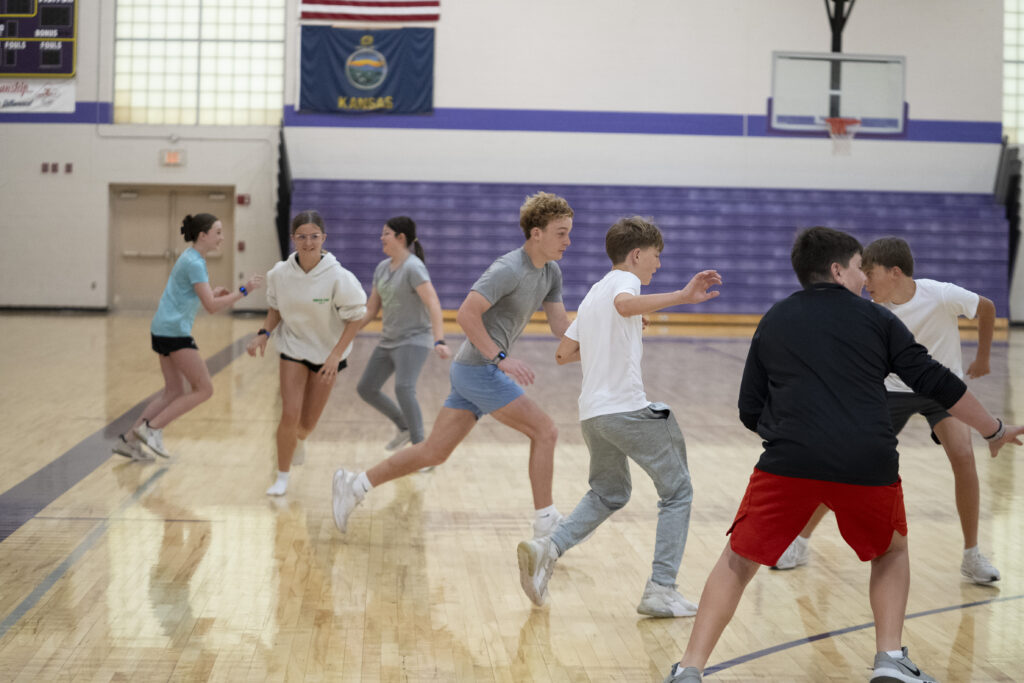
Your principal asks you a question that sounds simple: “How do we know PE is meeting standards?”
You know the answer. You see it every day. The student who finally pushed through an entire fitness circuit. The class that learned to pace itself instead of sprinting and stopping. The quiet kid who set a personal goal in September and crushed it in November. But “I’ve watched it happen” isn’t the kind of answer that holds up in a curriculum review, a board presentation, or a tense parent conference.
That gap between what PE teachers know and what they can prove is where student heart rate monitors earn their place.
In this blog post, we’ll break down what the SHAPE America physical education standards actually ask of students, how state PE standards build on them, and how heart rate data can help PE programs meet standards with evidence instead of estimates.
Key Takeaway
Heart rate monitors help PE programs meet standards by turning student effort into objective, measurable data. They show how long each student spends in each heart rate zone during PE class, directly supporting SHAPE America’s standards on fitness knowledge and personal goal setting. That same data gives teachers fair, defensible grading evidence and produces reports administrators, families, and state reviewers can actually understand.
What Are the SHAPE America PE Standards?
The Society of Health and Physical Educators, known as SHAPE America, released updated National Physical Education Standards in 2024, the first major update in over a decade. The new framework trimmed the standards from five to four and centers everything on physical literacy: helping students build the skills, knowledge, and confidence to stay active for life.
Under the 2024 SHAPE America standards, a physically literate student:
- Standard 1: Develops a variety of motor skills.
- Standard 2: Applies knowledge related to movement and fitness concepts.
- Standard 3: Develops social skills through movement.
- Standard 4: Develops personal skills, identifies personal benefits of movement, and chooses to engage in physical activity.
Each standard includes grade-span indicators describing what students should be able to do by the end of PreK-2, grades 3-5, grades 6-8, and grades 9-12. That’s where heart rate concepts appear by name. At the high school level, for example, students are expected to apply heart rate concepts to keep themselves safe and maximize health-related fitness outcomes.
📋 Learn why SHAPE America recognizes heart rate monitors as appropriate PE technology.
How State PE Standards Connect to the National Framework
Most state PE standards are built on, adapted from, or closely aligned with SHAPE America’s national framework, and a growing number of states have moved to adopt or adapt the 2024 version. The wording varies from state to state, but heart rate concepts show up again and again.
Florida’s benchmarks are a good example. Fourth graders are expected to keep their heart rate within their target zone for a set amount of time during aerobic activity. Sixth graders are asked to determine their personal target heart rate zone and explain how to adjust their intensity to stay in it.
Here’s the catch: standards like these are nearly impossible to assess fairly by eye. No teacher can watch 35 students at once and know who stayed in their target zone for 20 minutes. But a heart rate monitor can.
Why Observation Alone Can’t Prove Standards Are Being Met
Observation will always matter in PE. As the only measure, though, it has severe limits:
- Effort is invisible. A student jogging slowly may be working harder than the athlete lapping the track.
- Participation points reward compliance, not learning. Dressing in PE clothing and showing up don’t demonstrate mastery of fitness concepts.
- Subjective grades are hard to defend. When a parent questions a grade, “they didn’t seem to be trying” rarely settles the conversation.
- Evidence disappears when class ends. Without data, there’s nothing to show administrators at the end of a semester.
Dr. Kymm Ballard, a past president of SHAPE America, described this problem well in an interview with IHT: “The person who comes in first is not always the person who’s working the hardest. A lot of times, [the kid who is working the hardest] is the student who finishes last, and you can’t push them any harder. Knowing what their heart rate is, that’s the only way we can see inside as to what’s going on.”
⌚ Explore more benefits of wearable technology in education.
How Heart Rate Monitors Help PE Programs Meet Standards
Standard 1: Developing Motor Skills
A heart rate monitor won’t teach a student to dribble or throw. What it will do is show how active students really were during an activity. When post-class data reveals which stations kept students moving and which left them unengaged or waiting in line, teachers can redesign lessons so skill work is both active and purposeful.
Standard 2: Applying Movement and Fitness Concepts
This is where heart rate monitors for PE truly shine. Intensity, target heart rate, recovery, and aerobic endurance stop being vocabulary words when students see those concepts play out on their own wrist. A student picks up the pace and watches their heart rate zone change. They slow down and see it drop. Over weeks, students learn to adjust their own effort without being told, which is the kind of applied knowledge Standard 2 describes.
Standard 3: Developing Social Skills Through Movement
Because every student’s target heart rate is personal, heart rate data quietly changes how a class defines success. The fastest runner isn’t automatically the hardest worker, and students begin to understand that effort looks different for different bodies. Teachers can use class averages to set shared goals, like increasing the group’s total time in zone, without ranking anyone publicly. That shift builds the empathy, encouragement, and respect at the center of Standard 3.
Standard 4: Personal Skills, Personal Benefits, and Choosing to Move
Standard 4 recognizes that physical literacy goes beyond movement skills, and it includes the self-management students need to stay focused, engaged, and in control while they’re active. Heart rate monitoring gives students a concrete way to build that body awareness. By observing how their heart rate changes during activity and recovery, students wearing a wrist-based heart rate monitor can begin recognizing their body’s physiological responses and practice strategies such as controlled breathing. This creates opportunities to connect physical fitness instruction with personal awareness and emotional regulation. These moments connect fitness instruction to emotional regulation skills that students carry into the classroom and beyond.
Standard 4 also encourages students to set personal goals, reflect on their progress, and discover the benefits of movement. Heart rate monitors help students recognize that there are many ways to achieve their physical activity goals. Whether it’s dancing, biking, playing basketball, or participating in a fitness circuit, students can explore activities they genuinely enjoy and use their heart rate data to see how those activities contribute to their personal moderate-to-vigorous physical activity (MVPA) goals. By connecting activities they enjoy with measurable progress, students develop a sense of ownership over their fitness and begin building healthy habits that can last a lifetime.
What Standards-Based Heart Rate Data Means for Every Role
Not everyone in a school system needs the same information. That’s one of the biggest advantages of heart rate monitors for schools: the same data serves many different roles.
- PE teachers can set objective, defensible grades based on individual effort and share session reports with students and families.
- Adapted PE teachers can individualize heart rate zones for each student and gather objective progress data for IEP goals. This also greatly benefits students who can’t always communicate how they feel.
- Virtual PE teachers gain verifiable evidence that students actually moved at home, not just logged in.
- District leaders get consistent data across campuses showing how PE supports standards, student wellness, and whole-child goals, in a format a school board can follow.
🖥️ Learn more about virtual PE accountability and how to track PE students remotely.
What to Look for in Heart Rate Monitors for PE Classes
If you’re comparing options for your school or district, use this checklist:
- Personalized heart rate zones. Each student’s zones should reflect their own body, not a one-size-fits-all setting.
- Instant feedback on the wrist. Students should see their heart rate zone without stopping to look at a screen.
- Time-in-zone reporting. This is the metric that maps most directly to standards and grading.
- Built for K-12. Consumer fitness trackers aren’t designed for shared classroom sets, rosters, or school reporting.
- Software that shows growth over time. The monitors are only half the picture. Look for software that seamlessly stores every student’s data in one place and makes long-term progress easy to see and share.
- Durability and easy charging. Monitors need to survive busy school days, and a bulk charging case saves precious time between classes.
- Reports for every audience. Look for student, class, and family reporting without extra work.
- Student data privacy. Ask where data is stored, how it’s protected, and whether the vendor has signed the Student Privacy Pledge.
- Real customer support. You want people who answer quickly and know your account, not a ticket queue.
How the IHT Spirit System Can Help PE Programs Meet Standards
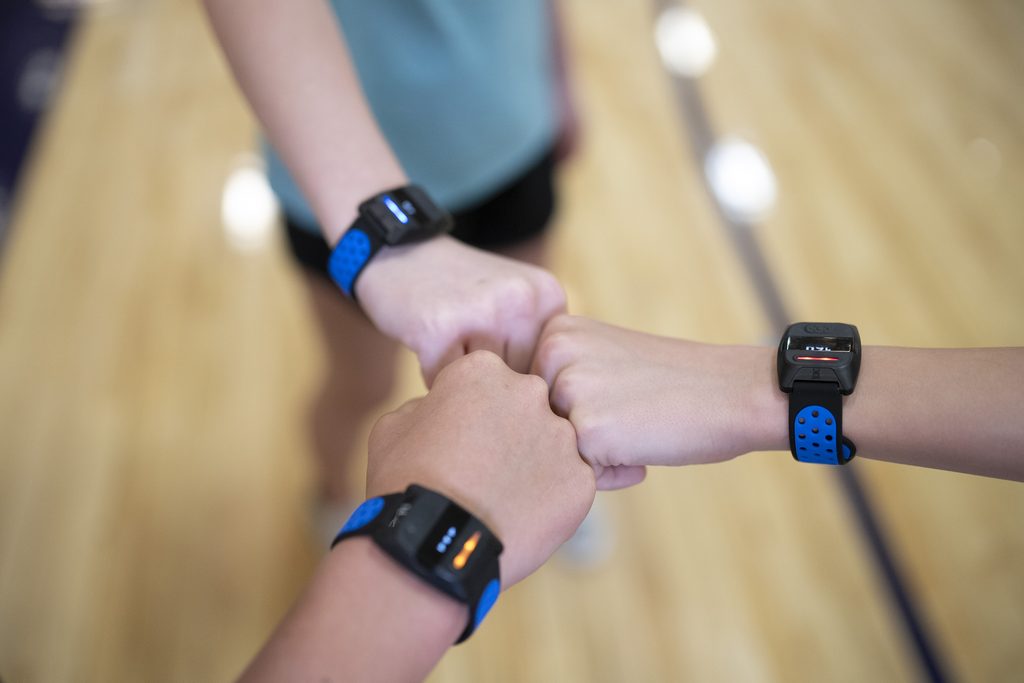
The IHT Spirit System pairs the Spirit heart rate monitor with the IHT Spirit Software Suite, creating a full loop from the student’s heartbeat to the teacher’s gradebook to the parent’s inbox. IHT has provided heart rate monitors to more than 11,000 schools worldwide, and IHT’s technology was included in SHAPE America’s position paper on the appropriate use of technology in physical education.
Here’s how the Spirit System supports standards-based PE:
- Color-coded zones in real time. LED lights on the Spirit monitor show each student their current heart rate zone right on their wrist, with no app or screen needed.
- Time in each zone, tracked automatically. After class, data syncs to the IHT Spirit Classroom App so teachers can review every student’s effort and grade it objectively.
- Class trends without singling anyone out. Teachers can view class averages, zone percentages, and total activity minutes while keeping individual data private.
- Assessments tied to standards. The IHT Spirit Assessment Software includes assessments and rubrics tied to national standards, plus a Student Growth Report that shows progress over time, from class to class and year to year.
- Data that follows students. Records stored securely in software, like the IHT Spirit Software Suite, let students use past performance data to set future goals and help schools show growth across years.
- Secure, U.S.-based data storage. Student data is encrypted and stored on secure U.S.-based servers, with regular backups so records aren’t lost. Only authorized personnel can access it, using multifactor authentication. Schools always own their data, and IHT never sells student information or uses it for advertising.
- Training, support, and funding help. IHT supports teachers from setup through the school year and helps schools identify grants and other funding opportunities.
💰 Need help funding heart rate monitors? Explore our funding and grant resources.
Frequently Asked Questions
Do heart rate monitors align with SHAPE America standards?
Yes. Heart rate monitors directly support Standard 2, which covers applying fitness concepts like heart rate and intensity, and Standard 4, which focuses on goal setting, reflection, and personal benefits of movement. They also support Standards 1 and 3 by revealing activity levels during skill practice and encouraging respect for individual effort.
Which state PE standards mention heart rate?
Many states include heart rate concepts in their PE standards, often beginning in upper elementary grades. Florida, for example, asks fourth graders to maintain their target heart rate for a set time and sixth graders to determine their personal target zone. Check your state’s standards for terms like “heart rate,” “target zone,” or “intensity.”
Can heart rate data be used for PE grades?
Yes, some PE teachers grade effort based on time spent in personal target heart rate zones. Because each student’s zones reflect their own body, this approach rewards effort instead of natural athletic ability and gives teachers objective evidence when grades are questioned.
How do heart rate monitors support adapted PE?
Heart rate monitors let adapted PE teachers individualize heart rate zones for each student and collect objective progress data for IEP goals. They’re especially valuable for students who are nonverbal or can’t always communicate how they feel. Learn more about how this Adapted PE teacher has been using IHT’s heart rate monitors to keep his students safe and confident.
Is student heart rate data private?
Student heart rate data kept by a school is generally part of a student’s education records under FERPA. IHT stores all data on secure U.S.-based servers, never sells student information, and has signed the Student Privacy Pledge. Read IHT’s full privacy policy.
How do schools pay for heart rate monitors?
Many schools fund heart rate monitor programs through grants and federal or state wellness funding. IHT offers custom quotes based on a school or district’s size, goals, and budget. Our team can also help you locate available grants and funding opportunities for your school.
Ready to Show How Your PE Program Meets Standards?
PE teachers already know their programs make a difference. Heart rate monitors simply make that difference visible: to students setting their own goals, to families wondering what happens in the gym, and to administrators who need proof before the next budget conversation.
Whether your state has adopted SHAPE America’s framework or follows its own PE standards, the expectations are that students should understand fitness concepts, apply heart rate knowledge, set personal goals, and choose to stay active. Heart rate monitors turn each of those expectations into something measurable and actionable.
If you’re ready to see how heart rate data can help your PE program meet standards, our team would love to show you how the IHT Spirit System can work for your students, your staff, and your budget.