Every school counselor, social worker, and special education teacher can quickly recall a moment when a student’s behavior escalates seemingly out of nowhere.
Frustration flares into an outburst. Anxiety spirals into a shutdown. By the time the behavioral incident reaches its peak, the opportunity for self-regulation has already slipped by. Yet, with the right tools, it’s possible to change this story.
Imagine if students could recognize the signs of emotional escalation early and learn to calm the storm themselves. This empowering skill is within reach for every child. They just need the right support and tools.
That’s exactly what schools across the country discover when they use wearable heart rate monitor technology like the Spirit System. Heart rate monitors are not only for physical education, but are also powerful self-regulation tools for students. And the impact is extremely eye-opening to student wellness professionals, students, and their families.
Why Heart Rate Is the Key to Emotional Self-Regulation
Emotional self-regulation (the ability to manage one’s emotional responses to challenging situations) is one of the most critical skills a child can develop. Research from the American Psychological Association journals shows that students with stronger emotional intelligence tend to perform better academically and handle stress and classroom challenges more effectively.
Unfortunately, young students often struggle to distinguish between excitement and anxiety. They can’t feel the physical escalation of stress until it’s already overwhelming them. They lack the self-awareness to know when to use the calming techniques counselors are working so hard to teach.
Heart rate is one of the body’s built-in signals. It’s one of the clearest, most objective physiological indicators of emotional state, and it changes in real-time. It naturally rises with stress, excitement, and challenge, often before a student is even aware of what they’re feeling. When students can see that signal in real time, it gives them a chance to recognize what’s happening inside and respond earlier.
It’s powerful to watch the students connect the dots and better understand themselves.
When a student’s heart rate rises during real moments in their day – before a test, during a disagreement, or even during a transition between classes – that change is meaningful. It’s a signal that something is happening internally, and it gives us a chance to step in earlier.
Over time, these moments start to add up. When heart rate is paired with what’s happening during the day – like the activity, environment, or how a student says they’re feeling – it begins to paint a clearer picture of how each student responds to stress, how quickly they recover, and what strategies help them regulate.
This approach builds on a growing understanding in education and psychology that helping students become aware of their internal signals can strengthen emotional control, resilience, and overall well-being.
How Heart Rate Monitors Work as Self-Regulation Tools for Students
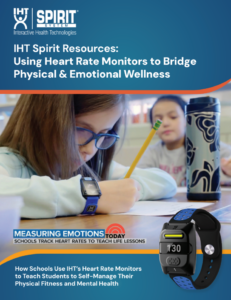
IHT’s Spirit Heart Rate Monitor translates heart rate data into color zones that even young children can understand intuitively:
- Blue = low or resting heart rate; calm, or happy
- Yellow = elevated heart rate; excited, eager, nervous, or frustrated
- Red = highly elevated heart rate; overjoyed, angry, terrified, or overwhelmed
This color-coded visual feedback creates a real-time, wrist-worn window into the body’s emotional state or what is driving their autonomic nervous system. When paired with emotional wellness curricula, breathing exercises, or behavioral intervention strategies, that feedback becomes something far more powerful than a data point. It becomes a cue for students to recognize what they’re feeling and take action.
This creates a simple but powerful loop: Students notice what’s happening in their body, connect it to how they’re feeling, and use strategies to bring themselves back to a calmer state. With practice, that awareness turns into lasting self-regulation skills.
The Spirit System is the only wrist-based heart rate monitor and assessment platform built specifically for K-12 students and emotional wellness. This design intent matters enormously in school settings, where ease of use, student engagement, and daily reliability are key to success.
That combination of purpose-built design and everyday usability is exactly why our monitors are the best heart rate monitors for schools, and why schools across the country are putting the Spirit System into practice with measurable results. Here are three real-world examples of how schools are helping students build emotional self-regulation using the system.
Real Schools, Real Results: How to Help Students Self-Regulate Their Emotions
Schools across the country are using this approach in real-world settings, with early results showing meaningful changes in student behavior, self-awareness, and emotional control.
Operation Dragon Heart: Littleton, Colorado
One of the most compelling examples of heart rate technology being used for emotional self-regulation comes from East Elementary School in Littleton, Colorado.
Principal Kelly Card and school counselor Kim Bailey could see that certain students were struggling to manage their emotions throughout the day, but they needed a tool to help students identify an emotional escalation before it became a behavioral incident. Heart rate was the answer.
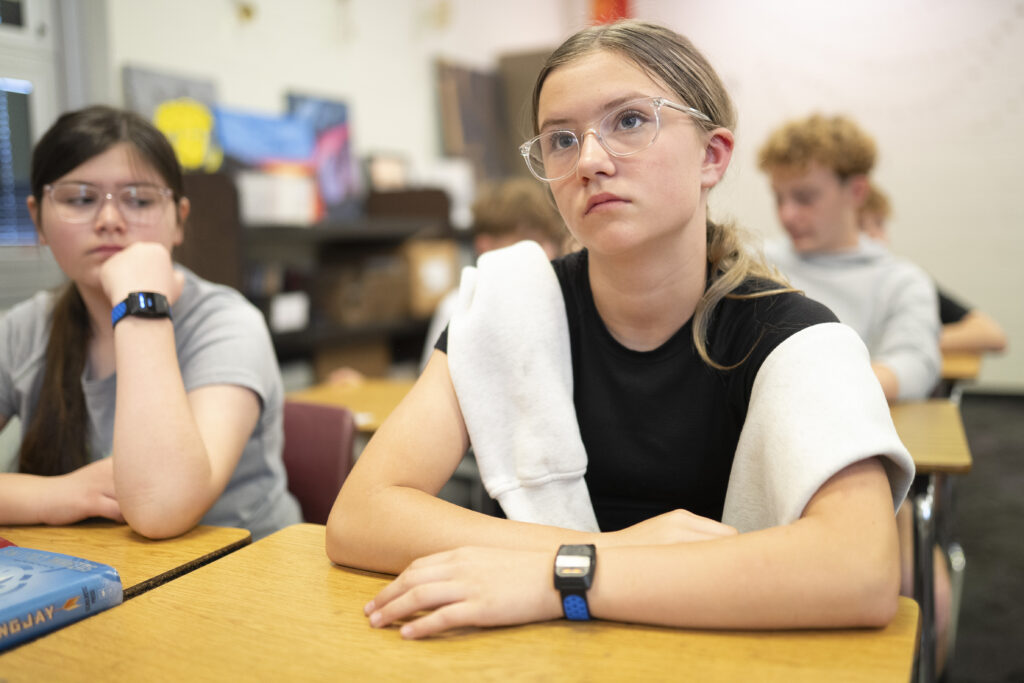
They launched a program called Operation Dragon Heart, in which select students wore IHT heart rate monitors throughout the entire school day. Alongside wearing the monitors, students participated in a counselor-led emotional wellness curriculum that taught the children age-appropriate impulse control, calming strategies, and emotional re-regulation techniques. Students picked up their monitors at the start of the day and returned them at the end, with heart rate reports automatically sent to their teachers, counselors, and parents.
The results were almost immediate. Within the first week, Principal Card watched a student who was clearly upset pause, look at the number on his monitor, and begin using the breathing exercises he was taught.
“He sat and watched the number on his [monitor] go down and get into his normal range, which was so cool to see … especially for this particular student,” Card said.
Since the students were already comfortable with technology, they were able to use real-time heart rate feedback to better understand what their bodies are feeling internally, turning those signals into a practical way to recognize, interpret, and manage their emotions in the moment (respond versus react).
Second-grader Charlotte Sherwood put it simply: “I was really emotional and now I’m a little bit stronger and calmer. I feel it’s made a big difference since I started wearing the monitor.”
The program proved so successful – and attracted so much national attention, including a feature on NBC’s Today show – that Littleton Public Schools Director of Social, Emotional, and Behavioral Services Nate Thompson announced the program would expand from East Elementary to all 13 of the district’s elementary schools. Before the expansion, behavior-based incidents at East Elementary had dropped from 17 in the prior school year to just three. Suspensions dropped from eight to three.
“Heart rate is one of the simplest and easiest ways to see how people are doing on the inside,” Thompson said. “The progress these students made was life-changing for them.”
Read the full story: Students Learn to Regulate Social-Emotional Behaviors Through Heart Rate Technology
Braham Area Elementary: Gaining Control of Emotions
When school social worker Jonelle Klemz at Braham Area Elementary School saw the Today Show’s segment on Operation Dragon Heart, she knew she’d found what she’d been looking for.
Klemz had watched the COVID Pandemic accelerate a crisis she’d already been tracking: a significant rise in student referrals related to anxiety, depression, and difficulty managing emotions across all grade levels. She wanted a tool that could help students develop lifelong self-regulation skills starting young, when children are still developing and most able to adapt.
With grant funding from the Grandy Lions Club, Klemz purchased enough IHT heart rate monitors for a classroom and a half. Each morning, a rotating group of students in grades 1 through 6 wore the monitors for the entire school day. Each day began with a lesson on emotional health, and each afternoon ended with Klemz reviewing the heart rate data with each student individually.
“I want them to see how their breathing affects their stress levels,” she said. “It’s not enough for me to just tell them that controlling their breathing will make themselves feel better; I can show them through the data.”
One story captured the power of the program particularly well. A student’s heart rate spiked dramatically during PE class, not because of physical exertion, but because other students were cheating during a game and he was furious. When Klemz later reviewed the data with him, he remembered exactly what had happened. But rather than the anger consuming the rest of his day as it typically would have, he had used the breathing techniques from Klemz’s lessons to bring his heart rate back to blue.
“That’s a student who would have been upset the whole day,” Klemz said. “We looked at his chart and he was blue the rest of the day. So I just told him how proud I was of him that he didn’t let that wreck his day.”
Klemz hopes that one day her students will carry these skills with them long after the monitors are gone, knowing themselves well enough to recognize what they feel and calm themselves without any help at all.
Read the full story: Braham Elementary Students Use New Technology to Regulate Their Emotions
Ann Arbor Public Schools: Supporting Students with Disabilities
Heart rate monitoring isn’t only transformative in general education settings. Adapted PE Consultant Deak Swearingen at Ann Arbor Public Schools recognized almost immediately that IHT’s heart rate monitors could be a game-changer for students with significant physical and cognitive disabilities.
For these students, our monitors create a new layer of visibility. An educator can see in real time when a student’s heart rate spikes beyond what their current activity level should produce and use that as an early signal to step in with support before a behavioral episode unfolds.
For students who work more independently, the visual color cues provide a form of communication that transcends verbal ability. One student with severe behavioral challenges had learned to associate the red zone on her monitor with the rising anxiety she’d always struggled to identify in herself. When she sensed it beginning, she started doing something that had never happened before: she asked to go walk around the track – proactively, on her own – and walked until her monitor turned yellow and then blue.
“That’s the visual component,” Swearingen said. “They understand this, and that is transcending.”
Swearingen’s results spoke for themselves, but the impact extended well beyond his own observations.
His colleague and Adapted PE Specialist Toni Bader echoed the broader impact: “Not only can IHT be used for exercises and learning about one’s heart rate, but it is a great tool for infusing social-emotional learning, monitoring emotions, and self-regulation strategies. This tool is student-friendly in its usability and engages and empowers students to learn and take action on their health.”
Read the full story: IHT Monitors Provide Personalized Wellness Indicators for Adaptive PE Students
What Makes Heart Rate Monitors Effective Self-Regulation Tools for the Classroom
These stories aren’t coincidences, they reflect a consistent pattern schools are discovering about how to help students self-regulate their emotions. More and more educators and schools are realizing that heart rate monitor technology is among the best ways to monitor student wellness in schools, because:
Biofeedback makes the invisible visible. Students who can’t yet name what they’re feeling can still see their heart rate. The color zones give them a shared, objective language for internal states that are otherwise completely private.
Real-time data creates teachable moments. When a counselor sits with a student and pulls up their heart rate graph from the day, showing exactly when their heart rate spiked during a test, at lunch, or during a transition, those moments become opportunities for insight that are impossible to replicate otherwise.
Practice builds independence. The goal of every school using our heart rate monitors for emotional self-regulation is the same: eventually, students internalize the awareness and the coping strategies well enough that they no longer need the monitor. The monitor is a scaffold, not a crutch.
It works across student populations. From kindergarteners learning to identify emotions for the first time, to students with behavioral challenges, to adapted PE students with complex disabilities, the color-coded visual feedback meets students where they are.
Since this fits naturally into the school day and works across different age groups and needs, schools are able to implement it in a variety of settings – from classrooms to counseling programs to special education – making it a practical and scalable approach to student wellness.
Frequently Asked Questions About Spirit Monitors Being Used For Emotional Self-Regulation
How do heart rate monitors help students self-regulate?
Heart rate monitors give students real-time biofeedback about their physiological state. When a student’s heart rate rises due to stress, anxiety, or emotional escalation, they can see it and practice calming techniques like breathing exercises to bring it back down. This visible feedback loop helps students build the self-awareness that is the foundation of emotional self-regulation. Click here to learn more about how the Spirit heart rate monitors improve student wellness.
Can heart rate monitors be used outside of PE class?
Absolutely. Many schools using IHT’s Spirit Heart Rate Monitor do so in counseling programs, special education settings, behavioral intervention programs, and even as all-day wear for students who benefit from continuous biofeedback. The Spirit System is built for holistic student health during the full school day, not just the gymnasium.
What self-regulation tools for students pair best with heart rate monitors?
Schools have had the greatest success pairing our heart rate monitors with established emotional wellness curricula, particularly programs that give students specific strategies to employ when they recognize their heart rate is elevated.
Is this approach appropriate for students with disabilities?
Yes, adapted PE teachers and special education staff have found heart rate monitors particularly valuable for students with behavioral challenges, anxiety disorders, and cognitive disabilities. The color-coded visual feedback is intuitive even for students who may not be able to read or verbally communicate their emotional state.
Want to Help Your Students Self-Regulate Their Emotions?
The Spirit Heart Rate Monitor was designed from the ground up for K-12 students and educators, built to support not only physical fitness, but whole-student wellness including emotional health and self-regulation.
Whether you’re a school counselor looking to add a data-driven layer to your emotional wellness program, a social worker supporting students with anxiety and behavioral challenges, or an adapted PE teacher seeking better tools to support students with disabilities, IHT has a solution that fits your program and your students.